
Blue lotus in brief
Blue lotus (Nymphaea caerulea) is a water lily brewed as a mildly calming tea. It does not get you high.
- Feels like
- Calm, a lighter mood, vivid dreams User report
- Tea dose
- 3 to 5 g of dried flower per cup User report
- Legal?
- Yes in 49 US states. Not FDA-approved.
Skip it if you’re pregnant, on antidepressants or sedatives, or about to drive. Why
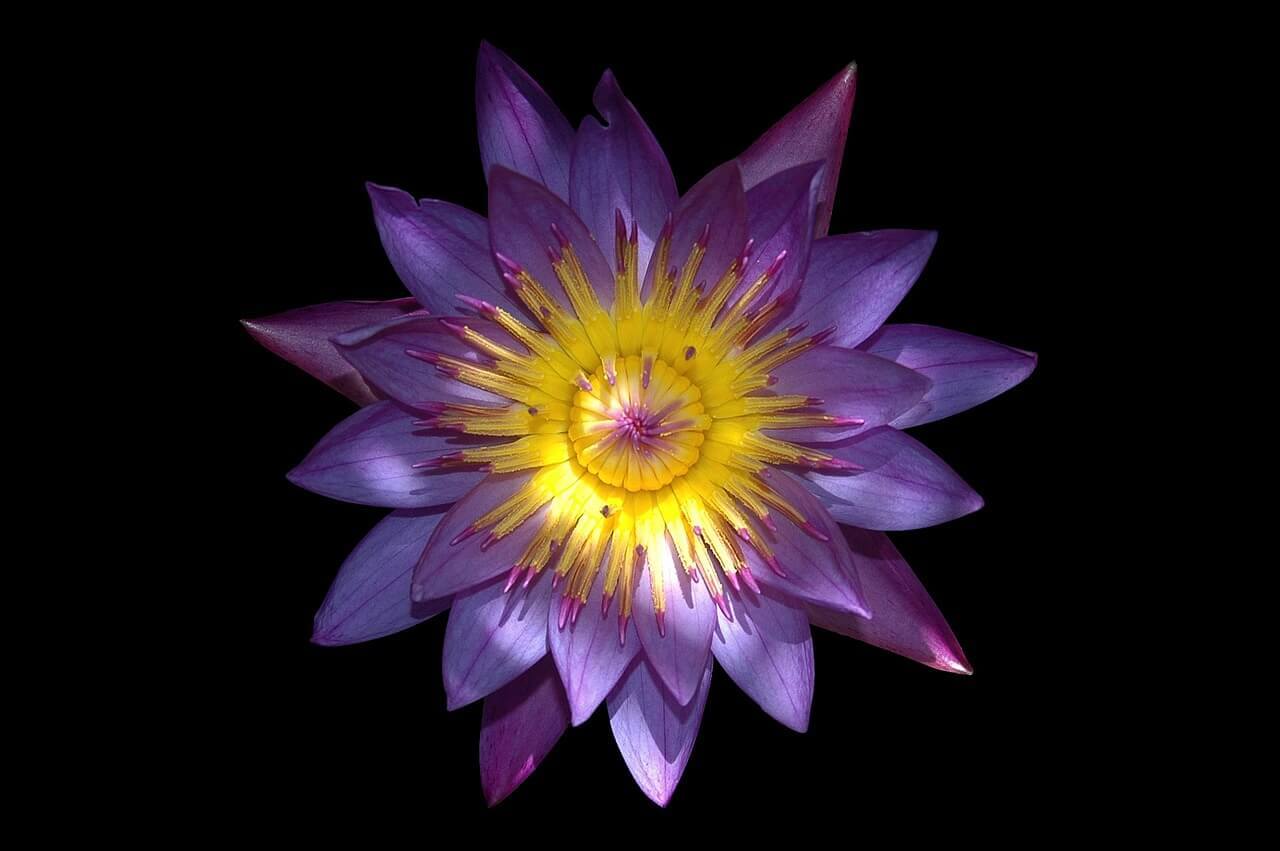
Fig. 1. The flower from above. It opens mid-morning and closes in the afternoon. Each number on the legend opens that part of the guide. Photo: Pixabay.
Already sure you want some? See the 4 sellers I checked
What is blue lotus?
- Petals
- Star-shaped, blue to violet. The open flower is 15 to 20 cm wide.
- Stamens
- Bright yellow. Good dried flower still shows them.
- Habit
- Opens mid-morning, closes in the afternoon. The leaves float and reach 40 cm.
Blue lotus is a blue water lily from ponds and slow rivers across Africa, from South Africa up to Egypt. [4] Shops also call it Egyptian blue lotus, blue water lily or blue lily of the Nile. Botanists list Nymphaea nouchali var. caerulea as a synonym.
It isn’t a true lotus. The sacred lotus is Nelumbo, a different genus, and some shops mix the two up.
| Blue lotus | Sacred lotus | |
|---|---|---|
| Genus | Nymphaea (water lily) | Nelumbo (true lotus) |
| Flowers | On or just above the water | Rise well above the water |
| Home | Africa and Egypt | Asia |
| Used for | Dried flower in tea | Seeds, rhizome and leaves in food and tea |
Seeds sold as blue lotus seeds are for growing the plant. They aren’t the dried flower you brew.
Blue lotus effects: what does it feel like?
It won’t get you high. It slows you down. Most people describe a calmer head, a lighter mood and dreams they remember. No clinical trial has tested blue lotus tea in people, so everything here is traditional use, lab work or user reports.
| Area | What people report | Weight |
|---|---|---|
| Mind | Calm, less stress, a mild mood lift | User report |
| Sleep and dreams | Winding down, vivid dreams, better recall | User report Traditional use |
| Body | Muscle ease, mild pain relief | User report |
| Meditation | Steadier focus, a quieter head | User report |
| Antioxidants | Seen in cells with isolated compounds, not in tea drinkers | Lab work |
Many people try blue lotus for anxiety. No trial has tested that. Nuciferine’s receptor profile makes the idea plausible, but plausible isn’t proven. Some people get sleepy instead of calm.
Is blue lotus psychedelic?
No. It isn’t a classic psychedelic, and no study I know of reports DMT in it. At tea doses, hallucinations aren’t the typical report.
Concentrates are different. A Military Medicine case series described 5 active-duty patients who reached the ER with sedation and perceptual disturbances. Four had vaped blue lotus extract and one had an infused drink. All recovered with supportive care. Case series [1]
The compounds: nuciferine and the apomorphine claim
Nuciferine. An alkaloid found in blue lotus and sacred lotus. In receptor tests it blocks serotonin 5-HT2A receptors and partly activates dopamine D2 receptors, close to some antipsychotic drugs. Rodent work only. Lab work [3]
Apomorphine. Often named as the active compound. A 2020 plant review traces the claim to a 2004 paper whose analysis couldn’t be checked, and says no study had confirmed apomorphine in the flowers. Unconfirmed [4] [5]
Flavonoids. Quercetin, myricetin and kaempferol glycosides, plus delphinidin, the pigment that makes the flower blue. Lab work [4]
Why one jar works and the next doesn’t. A 2023 study in Molecules tested 6 authentic industrial extracts. They held almost no apomorphine and only 10 to 72 ppb of nuciferine. None of the 11 commercial products it tested matched them, and several carried added fragrance compounds. The authors work for an essential oil company and tested perfume-grade extracts, not tea. [2]
Plant reviews also record West African uses: rhizome tea for fevers and insomnia, a flower decoction as a mild sedative and cough remedy. Traditional use [4] If dreams are your goal, my guide on blue lotus for lucid dreams covers timing and method.
How to make blue lotus tea
Use 3 g of dried flower and water at 175 to 190°F (80 to 88°C). Cover the cup and steep 5 to 10 minutes. Tea is the classic method and the easiest one to dose.
- Weigh 3 g of dried flowers or petals per person.
- Heat 1 to 2 cups of water to a near boil, then let it settle to 175 to 190°F (80 to 88°C).
- Steep covered for 5 to 10 minutes. Shorter is milder. Longer is stronger and more bitter.
- Strain and drink. Add honey or lemon if you like. Many people skip both.
Steep timer
Cold brew instead
Cold brew is smoother and less bitter, but slower. Put 3 to 5 g of dried flowers and 1 to 2 cups of cold water in a sealed jar. Refrigerate 4 to 8 hours, never past 24. Strain and drink it chilled.
Blue lotus for sleep
- Drink your tea 30 to 60 minutes before bed.
- Start at 3 g.
- Pick a night when you don’t need to be sharp in the morning.
Keep a short log (it beats any guide)
Write down four things each time: the amount and brewing method, the time you drank it, how you felt and when it faded, and your dreams if you drank it before bed. After 3 or 4 entries you’ll know your own sensitivity, and whether your jar is any good.
Blue lotus dosage: how much should you take?
Start with 3 g of dried flower per cup. If you feel nothing after a few tries, go up to 5 g. Don’t stack cups in one evening. No clinical trial set these numbers. They’re the consistent middle of what vendors and users report.
| If | Then |
|---|---|
| It’s your first cup | 3 g as tea |
| 3 g did nothing after a few tries | 5 g, and no more |
| 5 g still does nothing | Check your jar before anything else. Old or weak stock is the usual cause. |
| You use a tincture or extract | Follow the label. Strengths have no standard. |
| You want to smoke or vape it | No safe dose exists. Skip it. |
With tea, effects build over 30 to 60 minutes and last about 1 to 3 hours. User report No pharmacokinetic study exists for blue lotus in people.
Need 3 g to start? Healing Herbals shows lab reports on its flower pages. The Dream Joint sells the cheapest 10 g to try.
Is blue lotus safe? Side effects and who should skip it
At tea doses people report mild nausea, dizziness and drowsiness. Too much brings heavy sedation, and extracts and vapes have sent people to the ER. Human research is thin, so start low. Don’t drive after blue lotus.
| If you | Why | Do this |
|---|---|---|
| Are pregnant or breastfeeding | No safety data exists. | Skip it. |
| Take antidepressants, antipsychotics or other serotonin or dopamine drugs | Nuciferine acts on those receptors in lab work. No interaction studies exist. | Ask a pharmacist first. |
| Use sedatives, sleep aids or alcohol | Drowsiness can stack. | Don’t mix them. |
| Take diabetes medication | Blood sugar effects are untested in people. | Ask your doctor. |
| Serve in the US military | It’s on the DoD prohibited ingredients list. [6] | Avoid it. |
| Have a medical condition | Nobody has studied it in patients. | Talk to a healthcare professional. |
Why smoking and vaping are different
Inhaling skips the slow build of tea, so you can’t judge the dose as you go. Four of the five case series patients had vaped extract. Case series [1] The OPSS lists paranoia, anxiety, slurred speech, chest pain, a racing heart and seizure among reported ER presentations. [6] My advice is simple. Skip smoking and vaping.
Is blue lotus legal?
In the US, yes in 49 states. Louisiana restricts it for human consumption but allows ornamental use. The DEA has never scheduled it. Legal isn’t approved, though: the FDA hasn’t approved blue lotus as a food or supplement, so sellers label it as tea, incense or decor.
- United States. Legal in 49 states. Louisiana restricts human consumption.
- Rest of the world. Russia, Poland, Latvia and Lithuania are widely reported to prohibit it. Most other countries don’t list it, but rules change. Check yours.
- Military. It’s on the DoD prohibited supplement list, whatever the law says.
Reviewed 4 Oct 2026. Several states are watching this plant, so check your own state or country’s official source before you order.
Will blue lotus show up on a drug test?
Not on standard panels. Standard urine screens don’t test for it, and the military case series says it isn’t detectable on them. [1] Two caveats: some products are adulterated (the OPSS warns about synthetic cannabinoids), and employers can run custom panels.
Where to buy blue lotus (and spot a fake)
Buy whole dried flower that names Nymphaea caerulea and shows a batch lab report. Of the 4 sellers I opened on 4 Oct 2026, only Healing Herbals showed a lab report on its listings.
Real or fake? Four checks
- The look
- Whole or lightly broken petals, blue to violet, yellow stamens visible. Brown, brittle dust means old stock.
- The smell
- Lightly sweet and floral. A heavy perfume smell can mean added fragrance. [2]
- The name
- Nymphaea caerulea or N. nouchali var. caerulea. Nelumbo is the sacred lotus. “Blue lotus blend” tells you nothing.
- The proof
- A third-party lab report with a batch number. The OPSS warns some products contain synthetic cannabinoids. [6]
4 sellers I checked
Checked by hand on 4 Oct 2026. Seller links are affiliate links.
Healing Herbals
Best documented. Best for your first cup.
- Lab report
- Yes, COA on its listings
- Form
- Whole dried flower, loose-leaf tea
- Species
- “Egyptian hybrid”, not spelled out
- Rating
- 4.5 to 5.0 stars across its blue lotus products
- From
- $11.99
The Dream Joint
Cheapest way to try flower.
- Lab report
- None on the page
- Form
- Whole dried flower, 10 g, 6-month shelf life
- Species
- Nymphaea nouchali
- Rating
- 5 of 6 reviews are 5-star
- Price
- $8.00 $0.80 per gram
Kratora
Best value extract, for people who know their tea dose.
- Lab report
- None. Labeled “external use only”
- Form
- 50:1 extract powder, 5 g
- Species
- Not checked
- Rating
- 4.6 from 20 ratings
- From
- $5.99 on sale, was $7.99
Phytoextractum
Widest extract range.
- Lab report
- Not confirmed
- Form
- 4:1, 30x and 100:1 extract powders
- Species
- N. caerulea (pick that listing, not the Nelumbo one)
- From
- $11.95
Prices and ratings as seen on 4 Oct 2026. Louisiana restricts human consumption, so check a seller’s shipping rules. Full breakdowns: the blue lotus extract vendor guide and where to buy blue lotus.
Blue lotus tea, tincture or extract?
Start with dried flower as tea, because you can weigh it. Extract is the form people ask about most and the one where labels mislead most. The ratio (50x, 100:1) is flower-to-extract, and it says nothing about alkaloid content.
| Form | Dose control | My take |
|---|---|---|
| Dried flower | High. You weigh it. | Start here. |
| Wine or spirit infusion | Low | Mirrors the Egyptian tradition. Alcohol adds its own sedation. |
| Tincture | Medium to low | Strength varies by brand. Follow the label. |
| Extract (10x to 200:1) | Low | Ask for a lab report before you pay. |
| Powder | Medium | Weigh it. Scoops are unreliable. |
| Gummies, chai, drinks | Low | Check the label states the amount per serving. |
| Oil | Not applicable | Fragrance or topical. Not for drinking. |
Shopping for an extract? Match the label to the plant: Nymphaea caerulea, not Nelumbo. I compare extract sellers in the blue lotus extract vendor guide.
Egyptian blue lotus: history and symbolism
Egyptian art ties blue lotus to creation, rebirth and sunrise. The flower fits the story: it opens in the morning and closes in the afternoon. The god Nefertem is shown as a lotus blossom.
The Book of the Dead has a spell for turning into a lotus (Spell 81 in the usual numbering). Tomb art shows people holding and smelling blue lotus at banquets. Some researchers read that as ritual drug use. [5] Others read it as symbolism and perfume. Nobody has proven which.
That gap matters for you. Egyptian use tells you the plant was valued. It doesn’t give you a dose, and it doesn’t tell you it was safe.
Blue lotus FAQ
What is blue lotus?
Blue lotus (Nymphaea caerulea) is a blue water lily from ponds and slow rivers across Africa, from South Africa up to Egypt. It is also called Egyptian blue lotus or blue lily of the Nile. It is not a true lotus, which is a different genus, Nelumbo. The dried flower is brewed as a mildly calming tea.
What are the benefits of blue lotus?
People mostly report calm, a lighter mood, winding down in the evening and more vivid dreams. No clinical trial has tested blue lotus tea in people, so these benefits rest on traditional use, lab work and user reports. It is not approved to treat any condition.
What does the blue lotus flower look like?
The flower is star-shaped, blue to violet, 15 to 20 cm wide, with bright yellow stamens. It opens in mid-morning and closes in the afternoon. The leaves float on the water and reach about 40 cm.
What does the blue lotus flower symbolize?
In ancient Egyptian art, blue lotus is tied to creation, rebirth and sunrise, because the flower opens in the morning and closes in the afternoon. The god Nefertem is shown as a lotus blossom. Whether the Egyptians also used it as a drug is debated.
Is blue lotus safe?
At tea doses people report mild nausea, dizziness and drowsiness. Larger doses, extracts and vapes have caused heavy sedation and emergency room visits. Human research is thin. Skip it if you are pregnant or breastfeeding, ask a pharmacist first if you take antidepressants, antipsychotics, sedatives or diabetes drugs, and do not drive after.
Is blue lotus legal?
In the US, blue lotus is legal in 49 states. Louisiana restricts it for human consumption but allows ornamental use. The DEA has never scheduled it, but the FDA has not approved it as a food or supplement. It is on the DoD prohibited supplement list. Russia, Poland, Latvia and Lithuania are widely reported to prohibit it.
Does blue lotus get you high?
No, not the way cannabis or alcohol does. Most people describe calm and a lighter mood. Higher doses, extracts and vapes can cause sedation and perceptual disturbances, so they’re a different case. If a seller promises euphoria, ask for the lab report.
Why don’t I feel anything?
- Dose. Go from 3 g to 5 g next time.
- Quality. Old or weak stock does little. Products drift far from authentic material.
- Brewing. Water well below 175°F or a steep under 5 minutes makes a weak cup.
- Expectations. The effect is subtle. Look for a quieter mind.
How long does blue lotus last?
Users report about 1 to 3 hours. No pharmacokinetic study exists, so treat that as a rough range.
How long does it take to kick in?
With tea, it builds over 30 to 60 minutes. Smoking and vaping act faster, and that’s part of the risk.
How long does blue lotus stay in your system?
Nobody has measured it, and standard drug panels don’t test for it. By most reports the effects fade within hours.
Can I drive after taking blue lotus?
No. Drowsiness and slower reactions are the most common reports.
Is blue lotus addictive?
No study shows addiction, and nobody has studied long-term use. Few reports of dependence isn’t proof of safety.
Does blue lotus contain DMT?
No study I know of reports DMT in blue lotus.
Can you smoke blue lotus?
People do, but I don’t recommend it and I don’t give a dose. No safe amount has been established. See why smoking and vaping are different.
What is blue lotus good for?
People mostly use it to wind down in the evening, support sleep, meditate and work with dreams. It isn’t approved to treat any condition, and the human evidence is traditional use and self-report.
The short version
- Blue lotus is Nymphaea caerulea, a water lily, not a true lotus.
- Expect calm and a lighter mood, not a high.
- Brew 3 g at 175 to 190°F for 5 to 10 minutes. Go to 5 g only if you feel nothing.
- Buy whole flower with the botanical name and a batch lab report.
- Skip smoking and vaping. Skip it entirely if you’re pregnant or on antidepressants, sedatives or diabetes drugs.
Sources
- Schimpf, Ulmer, Hiller, Barbuto. Toxicity From Blue Lotus (Nymphaea caerulea) After Ingestion or Inhalation: A Case Series. Military Medicine.
- Dosoky et al. Chemical Composition, Market Survey, and Safety Assessment of Blue Lotus (Nymphaea caerulea Savigny) Extracts. Molecules, 2023.
- Farrell et al. In Vitro and In Vivo Characterization of the Alkaloid Nuciferine. PLOS ONE, 2016.
- Oosthuizen CB, Fisher M, Lall N. Nymphaea caerulea. In: Underexplored Medicinal Plants from Sub-Saharan Africa. Elsevier, 2020.
- Bertol E et al. Nymphaea cults in ancient Egypt and the New World: a lesson in empirical pharmacology. J R Soc Med, 2004.
- OPSS. Blue Lotus: Prohibited for Use.
Written by Adrian XH. Safety and legal sections reviewed 4 Oct 2026. This guide is for education and is not medical advice. Read the medical disclaimer and report problems on the adverse events page.