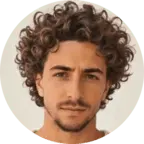
Vladimir Khavinson was a Soviet military doctor who spent 50 years building ultra-short peptides meant to slow aging, organ by organ. He died in January 2024. His peptides are now sold worldwide as “bioregulators.”
The short answer: there are two families. Cytogens are synthetic 2–4 amino acid peptides like Epitalon and Pinealon. Cytomaxes are organ extracts sold as capsules, numbered A-1 to A-21. They are run in short pulsed courses, not daily. The lab data is real. The human longevity claims come almost entirely from Khavinson’s own institute and have never been independently replicated.
Below: who Khavinson was, every peptide with its sequence and target organ, the protocol, and exactly where the evidence stops.
Who Was Vladimir Khavinson?
Vladimir Khavinson (27 November 1946 – January 2024) was a Russian gerontologist and colonel of the Soviet military medical service. He founded and directed the St. Petersburg Institute of Bioregulation and Gerontology.
- Military origins: In the early 1970s, at the Kirov Military Medical Academy in Leningrad, he and classmate Vyacheslav Morozov isolated peptides from calf thymus. The program was a Soviet defense project aimed at protecting soldiers and personnel under extreme stress, radiation, and toxins.
- Output: 196 patents, around 775 scientific publications, and six peptide drugs registered in Russia: Thymalin, Epithalamin, Cortexin, Prostatilen, Retinalamin, and Thymogen.
- Roles: Vice-president of the Gerontological Society of the Russian Academy of Sciences, chief gerontologist of St. Petersburg’s health committee, and head of the gerontology chair at North-Western State Medical University.
- Recognition: Awarded Russia’s Order of Friendship. Russian media nicknamed him “Putin’s gerontologist.” He claimed a 2010 Nobel Prize nomination, which has never been officially confirmed.
- Death: He died in St. Petersburg in January 2024, aged 77.
That background matters for one reason. Almost the entire evidence base for these peptides was produced by Khavinson, his institute, and his co-authors. Keep that in mind for the evidence section. (Sources: Wikipedia, Bumaga profile.)
What Are Khavinson Peptides?
Khavinson peptides, also called peptide bioregulators or Russian bioregulators, are ultra-short peptides, usually two to four amino acids long. Each is tied to one organ or tissue.
The theory: every tissue makes tiny regulatory peptides that decline with age. Replace them, and the tissue is nudged back toward youthful gene expression. The family splits into two types:
- Cytomaxes are the original natural extracts from young animal organs. Sold as oral capsules under brand names like Endoluten (pineal) and Vladonix (thymus).
- Cytogens are the later synthetic versions with defined amino acid sequences, such as Epitalon and Pinealon. Sold as capsules in Russia and as injectable vials in the Western research-peptide market.
The practical difference: a cytogen has one verifiable sequence you can test for. A cytomax is a complex mixture. You take its contents largely on trust. For a deeper comparison with standard peptides, see bioregulators vs regular peptides.
How Khavinson Peptides Are Said to Work
This is what makes the field interesting, and what draws the skeptics.
Most peptides bind a receptor on the outside of a cell. Khavinson’s claim is different. Because bioregulators are so small, they are said to slip into the cell nucleus without transport machinery. There they bind specific DNA sequences in gene promoter regions, and the histone proteins DNA wraps around. That binding is proposed to switch tissue-specific genes back on.
There is some support. A 2019 computational study in Nucleic Acids Research screened all 400 possible dipeptides for DNA binding. Most could not bind double-stranded DNA at all. But a few, including Khavinson’s KE (Vilon), were selective binders. Note that Khavinson is a co-author.
The stronger signal is independent. A 2025 Brunel University London study in Biogerontology, with no Khavinson-group authors, found Epitalon lengthened telomeres in normal human cells by upregulating hTERT and telomerase. That is the most credible outside confirmation in the entire field. The journal later published a correction notice, not a retraction.
The gap: a peptide working in a dish is not a peptide surviving digestion, reaching the nucleus, and slowing aging in a living person. That is where the evidence thins out.
The Full Khavinson Peptide List
Here is every major bioregulator, split by family. Sequences are as published by Khavinson’s group.
Cytogens: The Synthetic Peptides (With Sequences)
| Peptide | Sequence | Target | Known for |
|---|---|---|---|
| Epitalon (Epithalon) | AEDG (Ala-Glu-Asp-Gly) | Pineal gland | Telomerase, melatonin. The flagship. |
| Thymogen | EW (Glu-Trp) | Thymus / immune | Registered drug in Russia |
| Vilon | KE (Lys-Glu) | Thymus / immune | The two-amino-acid bioregulator |
| Pinealon | EDR (Glu-Asp-Arg) | Brain / CNS | Neuroprotection, cognition, sleep |
| Vesugen | KED (Lys-Glu-Asp) | Blood vessels | Vascular support, neuron dendrite growth |
| Cortagen | AEDP (Ala-Glu-Asp-Pro) | Brain cortex | Synthetic analog of Cortexin |
| Cardiogen | AEDR (Ala-Glu-Asp-Arg) | Heart | Cardiomyocyte support |
| Chonluten | EDG (Glu-Asp-Gly) | Lungs / bronchi | Respiratory mucosa |
| Bronchogen | AEDL (Ala-Glu-Asp-Leu) | Bronchi | Airway epithelium |
| Pancragen | KEDW (Lys-Glu-Asp-Trp) | Pancreas | Studied in type 2 diabetes |
| Livagen | KEDA (Lys-Glu-Asp-Ala) | Liver | Chromatin decondensation in aging cells |
| Ovagen | EDL (Glu-Asp-Leu) | Liver / GI tract | Hepatic and digestive support |
| Cartalax | AED (Ala-Glu-Asp) | Cartilage / bone | Joint and connective tissue |
| Crystagen | EDP (Glu-Asp-Pro) | Immune | Immune cell regulation |
| Prostamax | KEDP (Lys-Glu-Asp-Pro) | Prostate | Synthetic analog of Prostatilen |
| Testagen | KEDG (Lys-Glu-Asp-Gly) | Testes | Male reproductive support |
| Vesilute | ED (Glu-Asp) | Bladder | Urinary tract support |
Cytomaxes: The A-Series Organ Extracts
These are the capsule products most people mean when they search “Khavinson bioregulators.” Each is a natural peptide complex from young animal tissue, so there is no single sequence. More on sourcing these in our bioregulator capsules guide.
| Code | Name | Target organ |
|---|---|---|
| A-1 | Suprefort | Pancreas |
| A-2 | Thyreogen | Thyroid |
| A-3 | Ventfort | Blood vessels |
| A-4 | Sigumir | Cartilage and bone |
| A-5 | Cerluten | Brain |
| A-6 | Vladonix | Thymus / immune |
| A-7 | Svetinorm | Liver |
| A-8 | Endoluten | Pineal gland |
| A-9 | Pielotax | Kidneys |
| A-10 | Stamakort | Stomach |
| A-11 | Visoluten | Eyes / retina |
| A-12 | Chitomur | Bladder |
| A-13 | Testoluten | Testes |
| A-14 | Chelohart | Heart |
| A-15 | Zhenoluten | Ovaries |
| A-16 | Libidon | Prostate |
| A-17 | Glandokort | Adrenal glands |
| A-18 | Gotratix | Muscle |
| A-19 | Taxorest | Bronchi |
| A-20 | Bonomarlot | Bone marrow |
| A-21 | Bonothyrk | Parathyroid |
The Six Registered Russian Drugs
Separate from the supplements, six Khavinson preparations are registered medicines in Russia: Thymalin (thymus extract), Epithalamin (pineal extract, the parent of Epitalon), Cortexin (brain cortex extract), Prostatilen (prostate extract), Retinalamin (retina extract), and Thymogen (synthetic Glu-Trp). None is approved by the FDA or EMA.
Do Khavinson Peptides Actually Work? The Evidence in Three Tiers
Tier A: Cell and Animal Data (Strongest)
- Epitalon activates telomerase and lengthens telomeres in human cells. This has now been reproduced by an independent UK lab.
- Epitalon extended lifespan in fruit flies by roughly 11–16% and in mice by around 12% in Khavinson-group studies.
- Several short peptides, including Vesugen and Pinealon, promoted dendrite growth in neurons derived from elderly human donors.
Tier B: The Human Mortality Claims (Weak)
The famous “four-fold lower mortality” figure comes from a 2003 study by Khavinson and Morozov in Neuroendocrinology Letters. It followed 266 elderly people for six to eight years. Reported mortality drops versus controls:
- Thymalin alone: 2.0–2.1 fold lower
- Epithalamin alone: 1.6–1.8 fold lower
- Both together: 2.5 fold lower
- Both, given annually for six years (a small subgroup): 4.1 fold lower
Kiev collaborators led by Korkushko later reported lower cardiovascular mortality with the pineal extract over 12 and 15 years. These numbers are striking. But the groups were small, the methods are thinly reported, and the authors ran the program that sells the product.
Tier C: The Single-Lab Problem
Almost every human study comes from Khavinson’s institute and close collaborators, often in journals linked to the group. In 50 years, no independent Western randomized controlled trial of any Khavinson bioregulator has been published.
Vasily Vlasov, vice-president of the Russian Society of Evidence-Based Medicine, called the mechanism a “fantastic hypothesis” and said the peptides were never tested in a normal comparative experiment. He also reported that outside researchers given access to the compounds had to list Khavinson and Morozov as co-authors. That concentrated the literature even further.
Verdict: promising biology, unproven human longevity benefit.
The Khavinson Protocol: How Bioregulators Are Dosed
This surprises most people. These are not daily-forever compounds.
The defining protocol is pulsed cycling: a short course, then a long break. The rationale is that the peptides trigger gene-expression changes that persist for months after the peptide clears.
- Cytomax capsules (label protocol): typically 1–2 capsules daily for 10–30 days, repeated 1–3 times a year. Some sellers claim an aftereffect of 6–12 months.
- Cytogen vials (Epitalon research schedules): short 10–20 day courses, repeated one to four times a year.
- Original clinical studies: Thymalin and Epithalamin were given as short injection courses once or twice a year.
This is the opposite of how most Western peptides are run. It also means the popular nightly Epitalon-plus-Pinealon sleep stack is a modern adaptation, not the schedule the Russian trials tested.
Forms vary. Cytogens come as injectable lyophilized vials, capsules, or sublingual drops. Cytomaxes are oral capsules. The obvious problem with oral short peptides is digestion. A tiny peptide swallowed has to survive stomach acid and enzymes. That is a real question mark over oral products, and no marketing page wants to dwell on it. For reconstituting vials, use our peptide reconstitution calculator.
The Khavinson Stack
There are two versions of the “Khavinson stack” online. Know which one you are looking at.
- The first-class cytomax stack (Russian original): six capsules covering the main systems. Endoluten (A-8, pineal), Vladonix (A-6, thymus), Cerluten (A-5, brain), Sigumir (A-4, joints), Svetinorm (A-7, liver), and Ventfort (A-3, vessels). Usually run as a 1–2 month course, twice a year.
- The Western cytogen stack: Epitalon plus Pinealon, often with Thymalin or Vesugen, run as separate pulsed courses. Epitalon covers the pineal and telomerase side. Pinealon covers neuroprotection.
Epitalon plus Pinealon is by far the most requested pairing. Just remember the nightly version differs from the pulsed clinical schedule.
Safety and Side Effects
Across the published literature, bioregulators show a clean safety profile. No serious adverse events were reported in the long-term human studies. In mice, the data trended anti-tumor rather than tumor-promoting.
Three honest caveats:
- Cancer theory: telomerase activation raises a theoretical cancer concern. The 2025 Brunel study found Epitalon also lengthened telomeres in breast cancer cell lines, via a different pathway (ALT). The animal data points the other way, but this is not settled.
- Thin Western toxicology: vendors advise avoiding bioregulators in active or past cancer, pregnancy, and breastfeeding for lack of data.
- Gray-market purity: contamination and mislabeling add their own risk on top of the compound. See our peptide scam alerts.
Where to Buy Khavinson Peptides
The science is only as good as the vial. For synthetic cytogens like Epitalon, Pinealon, and Vesugen, demand a batch-specific third-party Certificate of Analysis. It should show HPLC purity and mass-spec confirmation of the exact sequence, with a lot number that matches your vial.
Cytomax extracts are harder to verify because they are complex mixtures, not single peptides. Vendor trust matters even more there. Our verified peptide vendors guide scores sources against independent COA testing.
Regulatory note for 2026: the FDA’s stance on compounded peptides has been in flux, with several compounds moving on and off restricted lists. None of these are FDA-approved for longevity. In the US and EU they are sold as research compounds or supplements. FDA’s Category 2 page (current as of 22 Apr 2026) lists Epitalon as a withdrawn nomination. FDA’s compounding advisory committee reviewed it in July 2026, and an advisory vote is not approval.
Frequently Asked Questions
Who was Vladimir Khavinson?
A Russian gerontologist and Soviet military medical colonel (1946–2024) who directed the St. Petersburg Institute of Bioregulation and Gerontology. He developed peptide bioregulators, registered six peptide drugs in Russia, and held 196 patents.
When did Vladimir Khavinson die?
In January 2024 in St. Petersburg, aged 77.
What are Khavinson peptides?
Ultra-short peptides, usually two to four amino acids, each tied to a specific organ. They are proposed to restore youthful gene expression in aging tissue. They split into natural organ extracts (cytomaxes) and synthetic defined-sequence peptides (cytogens).
How many Khavinson peptides are there?
About 17 synthetic cytogens, 21 numbered cytomax extracts (A-1 to A-21), and six registered Russian drugs. Overall, Khavinson’s group introduced six drugs and 64 peptide food supplements.
Do Khavinson peptides actually work?
The cell and animal evidence is real, including telomerase activation, now independently reproduced for Epitalon. The human life-extension claims rest on small single-lab studies with no independent Western replication. Promising, but unproven.
What is the most famous Khavinson peptide?
Epitalon (AEDG), the synthetic pineal tetrapeptide studied for telomerase activation and melatonin regulation.
How are Khavinson peptides dosed?
In pulsed courses, usually 10–30 days, repeated one to three or four times a year. Not continuous daily use, because effects are proposed to persist after the peptide clears.
Are Khavinson peptides FDA-approved?
No. Six preparations are registered drugs in Russia, but none is FDA-approved, and they are sold in the West as research compounds or supplements.
What is the difference between cytomaxes and cytogens?
Cytomaxes are natural organ extracts sold as capsules, like Endoluten. Cytogens are synthetic peptides with defined sequences, like Epitalon and Pinealon, sold as capsules or research vials.
Is the four-fold mortality claim real?
It comes from a small subgroup in one 2003 study of 266 people, run by Khavinson’s own group, with no independent replication. Interesting, but not decisive.
Conclusion
Vladimir Khavinson’s peptides are the most fascinating and most frustrating corner of longevity science. Solid theory. Real telomerase data, now confirmed outside Russia. Genuine animal lifespan results. And human claims built on 50 years of single-lab studies the West has never replicated.
Don’t swallow the “four-fold mortality, 15 million patients, Nobel nomination” marketing as settled science. It isn’t.
If you explore Khavinson peptides, start with a defined-sequence cytogen from a third-party-tested source. Respect the pulsed protocol. Keep expectations grounded in evidence. For more options by goal, try our Peptide Finder or browse the full list of peptides.
Khavinson peptides are not approved by the FDA for any longevity use, and this article is educational only, not medical advice. Statements here describe published research and are not treatment or dosing recommendations. Consult a qualified clinician before using any peptide. Links may include affiliate links; we only reference sources meeting independent verification standards.