
Pinealon can pass through cell membranes and enter the nucleus, the cell’s control center. A neuroprotective tripeptide that interacts directly with DNA to make measurable and structural improvements in human neurons.
Our clinic tested and verified choice:
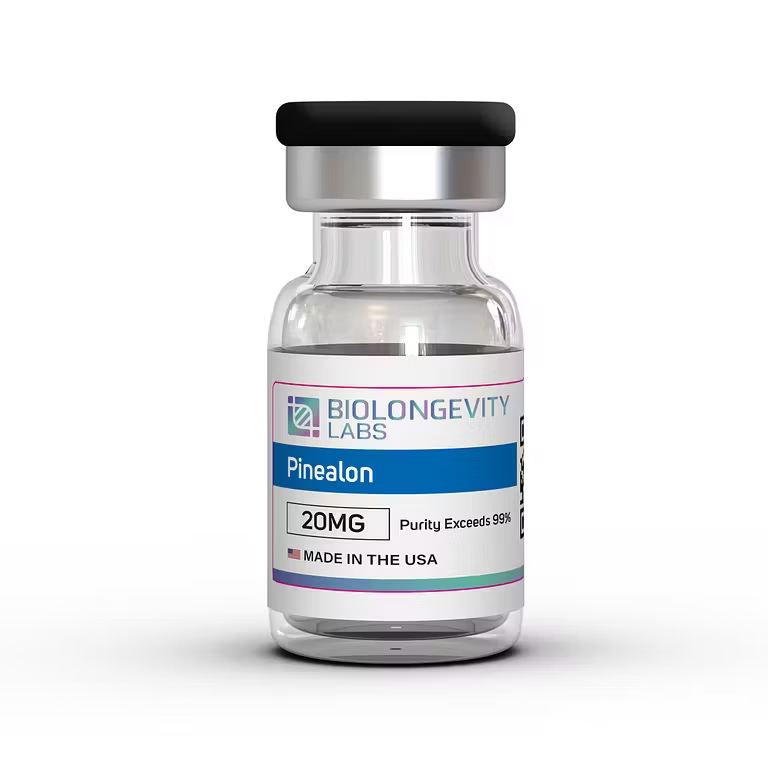
Pinealon 20mg
Tri-peptide complex for cognitive clarity, memory & brain cell repair. Third-party tested.
Get Pinealon — Add to CartFree shipping over $150 • Ships from US
What Is Pinealon & Why Is It Unique?
Three amino acids linked together: Glutamic acid, Aspartic acid, and Arginine.
Most peptides bind to receptors on the outside of cells. This effectively enhances the brain’s inherent protective system.
Pinealon is small enough to pass through cell membranes and interact with DNA, affecting specific atoms.
The Science of Pinealon Peptide Benefits
Pinealon is like a master key that gets inside the cell without knocking on the door. Once inside, it binds to specific DNA sequences and affects key genes. According to research, these are the affected genes:
- SOD2(Shields Neurons): Critical for producing enzymes that protect cells from oxidative damage before they harm neurons.
- GPX1: Hinders cellular damage caused by hydrogen peroxide, a source that accumulates as we age.
- TPH1 (Key to Serotonin): Key enzymes that start serotonin production.
- PPARA and PPARG: Regulate fat metabolism and inflammation in brain tissue. Keeps a clean environment around neurons.
- Caspase-3 & p53 (The “Kill Switch” Inhibitors): Pinealon helps the system suppress “pro-apoptotic” proteins, telling brain cells not to die under stress.
Pinealon Gives Cells More Time to Prepare Defenses Against Stress
When neurons are under oxidative stress, your body initiates a signaling pathway that activates within around 2.5 minutes.
Pinealon has shown to delay this by 20 minutes. Cells have more time to mount defenses and prevent premature cell death.
Helps the Brain Recover After Major Injury
Pinealon can support the brain’s healing process after a major injury. Researchers in a study of 72 people (ages 30–74) concluded that adding Pinealon to standard care made a real difference.
Patients felt better. Fewer headaches. And felt more emotionally stable. Their memory recovery was obviously faster than that of those who didn’t take it.
When doctors examined brain waves, they could see a clear surge in the “alpha-index” – a quality often associated with a relaxed, focused state of mind.
Slowing Down Biological Clock
Is it possible to slow down the aging process? A 2015 study of 32 adults who struggle with chronic health issues may show it’s possible. By using Pinealon and Vesugen, patients noticed that vital organs operate more effectively and the central nervous system more efficiently.
The interesting finding is that the biological aging markers slowed down. These benefits occur safely without a destructive effect on genetics.
Cycling: The Critical Approach
Bioregulator peptides aren’t designed for continuous use. The standard approach is 10 to 30 days on, then several months off before the next cycle.
Most researchers recommend two to four cycles per year for maintenance.
Pinealon Oral vs Injection
Most peptides get destroyed by stomach acid, so they have to be injected. Pinealon is the exception. As a tripeptide it is small and stable enough to survive oral use, which is why the main human trial used an oral form. Injection delivers more reliably at lower doses. Oral is easier and needle-free but needs more material. Both routes show up in the research.
Pinealon at a Glance
| Property | Detail |
|---|---|
| Sequence | Glu-Asp-Arg (EDR peptide) |
| Molecular formula | C15H26N6O8 |
| Molar mass | 418.41 g/mol |
| CAS number | 175175-23-2 |
| BBB crossing | Yes, via the PEPT2 transporter |
| Routes | Oral and subcutaneous |
| Typical cycle | 10-20 days on, months off, 2-4x per year |
Pinealon Results Timeline: What to Expect
Pinealon is not a same-day compound. You do not feel it the afternoon you take it, and that throws people off.
- Minutes: cellular signaling begins, but you feel nothing.
- 1 to 2 weeks: the first subtle shift, usually clearer focus and less brain fog.
- 4 to 8 weeks: the more noticeable Pinealon benefits, memory and mood.
- Across multiple cycles: the structural, protective effects that are the real point.
The benefits are cumulative and tied to how well the protocol is run. Patience is the price of admission.
Pinealon Stack
Pinealon pairs with the rest of the Khavinson bioregulator family, each covering a different angle:
- Epitalon (AEDG): targets the pineal gland, stimulates telomerase, supports melatonin. The longevity anchor.
- Cortexin / Cortagen: complementary brain neuroprotection.
- Vesugen (KED): vascular support. Paired with Pinealon you cover both neuroprotection and cerebral blood flow.
A common longevity stack runs Pinealon for the brain-specific protection that Epitalon and NAD+ do not fully cover alone.
Pinealon vs Epitalon
People get this comparison wrong most often, since both come from Khavinson. Epitalon is the systemic longevity peptide: pineal gland, telomerase, whole-body aging clock. Pinealon is the brain specialist that crosses into neurons and protects cognitive structure specifically. Epitalon is the body’s clock; Pinealon is the brain’s bodyguard. Serious protocols often run both, because they do not overlap.
Safety: What You Need to Know
It has a clean safety record according to research and user reports. No published serious adverse events. Used for decades in Russia without major problems.
Common Side Effects
Headache is the most common complaint, most common in the initial days. This typically resolves as your body gets used to Pinealon.
Other occasional notes:
- Mild nausea
- Transient sleep changes (especially with evening dose)
- Vivid dreams
- Injection site reactions for subcutaneous users
No symptoms of withdrawal or patterns of dependence are reported.
The safety profile stems from Pinealons’ metabolic simplicity. Once the job is finished in the nucleus, the body breaks it down back into its three amino acids. No toxic metabolites are left behind. It becomes like recycled ‘food’ for cells.
Who Should Be Careful?
Pregnant females or those breastfeeding should avoid it. Not enough safety data exists.
People with autoimmune diseases are advised to consult a doctor first.
Those with a history of cancer should proceed with caution. Pinealon modulates pathways that affect cell proliferation.
Those with epilepsy or seizure disorders should use it with care.
The Legal Situation
Pinealon is not FDA-approved for therapeutic use. Legal to buy as a “research chemical” with a disclaimer “not for human consumption.”
Russian formulations can also be imported for personal use.
Related Peptides: The Khavinson Family
The peptide family can help you see how it connects to a protocol.
- Epithalon (AEDG): Khavinson’s most famous peptide. Targets the pineal gland, stimulates telomerase activity, and supports melatonin production.
- Cortagen (AEDP): Another bioregulator for the brain with complementary neuroprotective mechanisms.
- Vesugen (KED): A peptide for the vascular system. Using it with Pinealon targets both neuroprotection and cerebral blood flow.
Where to Buy: Quality Matters
The quality and purity determine whether it’s safe to use and if it actually does something for the brain. Check out verified peptide vendors and do your own research.
The market is filled with counterfeits and impurities.
Pinealon vs. Other Options
| Compound | Primary Mechanism | Receptor-Dependent? | Onset | Best For |
|---|---|---|---|---|
| Pinealon | Direct DNA/epigenetic | No | Weeks | Long-term protection |
| Semax | BDNF/melanocortin receptors | Yes | Minutes | Acute enhancement |
| Cerebrolysin | Neurotrophic factors | Mixed | Days | Acute injury recovery |
| Racetams | AMPA receptors | Yes | Hours | Daily performance |
| Lion’s Mane | NGF promotion | No | Weeks | Accessible alternative |
Pinealon vs. Cerebrolysin
Cerebrolysin is like “fertilizer” for the brain, providing many growth factors for immediate healing after trauma.
Pinealon “updates” the brain’s software for specific genes to keep existing neurons healthy and resilient in the long run.
Pinealon vs. Semax
Semax is great for learning or working long shifts. Works quickly to boost focus.
Pinealon is gentle and won’t provide immediate “feel”. It slowly rebuilds the dendritic structure over weeks of cycling.
Why Choose Pinealon?
The strongest appeal compared is its metabolic simplicity.
The body can break down the three amino acids into “recycled food” for cells once the job is done. This makes side effects practically absent.
The Bottom Line
Pinealon is a unique neuroprotective peptide with long-term scientific research.
It can cross cell membranes and interact directly with DNA, triggering genes that prevent neuronal damage and premature cell death.
Research shows Pinealon can restore brain structure, promote cognitive recovery, and slow biological aging markers. All this with an excellent safety profile.
Both users and clinicians should approach Pinealon with informed caution. Don’t ignore cycling protocols. And ensure the peptide is legit to fully realize the neuroprotective benefits.
What is Pinealon used for?
Primarily in neuroprotection and cognitive recovery. Researchers are investigating its ability to recover the physical structure of neurons (dendrites) after traumatic brain injury (TBI), chronic stress, or age-related decline. It is also used to improve sleep and emotional stability, as it regulates genes involved in serotonin signaling.
Does Pinealon cause permanent changes to DNA?
No. Nuclear genetic studies show Pinealon is safe. It interacts with the DNA “promoters” in your body to signal cells to generate protective proteins, but doesn’t change or “rewrite” your genetic code. It simply makes the body’s existing natural defense processes more efficient.
How long does it take for Pinealon to work?
Cellular signaling starts in minutes, but the most noticeable benefits typically emerge in 1–2 weeks. Structural changes, including the growth of new neural connections (arborization), usually take a full 10–20-day cycle and can sometimes continue improving for weeks after cycles are completed. Clear benefits generally take 4–8 weeks, while full protective effects may require sustained use over several cycles.
Can you take Pinealon orally?
Yes. Unlike most peptides destroyed by stomach acid, Pinealon (EDR) is a tripeptide—meaning it’s small and stable. The main Russian clinical trial of 72 human subjects used an oral (0.4mg/day) supplement with significant improvements in memory and attentional function.
How long until Pinealon works?
The subtle effects can appear within 1 to 2 weeks. More noticeable benefits typically develop over four to eight weeks. Full protective effects likely require longer use across multiple cycles.
Why doesn’t Pinealon work for everyone?
The gender difference in mouse studies (males responded, females didn’t) may partially explain this. Genetic factors likely play a role. And some people may simply have less room for improvement.
Can Pinealon help with Alzheimer’s?
Preclinical studies suggest beneficial effects on cellular pathways related to neurodegeneration. However, no human trials indicate an impact for Alzheimer’s disease. It should not be regarded as a treatment.
The statements made regarding Pinealon (EDR) have not been evaluated by the Food and Drug Administration. This product is not intended to diagnose, treat, cure, or prevent any disease.