
Most brightening actives are weak. Mandelic acid at 25% concentration can deliver results that rival a professional clinic peel, for under seven dollars a session. Here is the complete guide to how it works, which concentrations do what, and why dermatologists keep reaching for it over more famous acids.
The Molecule That Changes Everything
Mandelic acid was first isolated in 1831 when chemists boiled bitter almonds in hydrochloric acid. The name comes from the German word Mandel, meaning almond. It sat largely unused in medicine for over a century before aestheticians noticed something unusual: it exfoliated skin dramatically while causing far less redness than its chemical relatives.
The reason is molecular mass.
Every alpha-hydroxy acid works by loosening the bonds between dead skin cells and accelerating cell turnover. But how deeply and how fast an AHA penetrates depends almost entirely on its molecular weight:
- Glycolic acid: 76 Daltons (smallest, fastest, most irritating)
- Lactic acid: 90 Daltons
- Mandelic acid: 152 Daltons (largest, slowest, most controlled)
At 152 Daltons, mandelic acid is nearly twice the size of glycolic acid. That size buys time. The molecule disperses more evenly across the stratum corneum before entering, which prevents the localized hotspots of irritation that make glycolic acid problematic for sensitive and melanin-rich skin. The effect is still real: the exfoliation is still happening, but it just happens at a pace the skin can manage without triggering inflammation.
This distinction matters enormously for hyperpigmentation, because inflammation is one of the primary triggers of further pigmentation.
How Mandelic Acid for Hyperpigmentation Works
Hyperpigmentation has one source: melanocytes producing more melanin than surrounding cells. The enzyme that drives this process is called tyrosinase. It catalyzes the conversion of the amino acid tyrosine into dopaquinone, which oxidizes into melanin. Block tyrosinase, and you interrupt melanin production at its source.
Mandelic acid blocks tyrosinase.
This is the same mechanism used by kojic acid, alpha-arbutin, and vitamin C, but mandelic acid delivers it alongside physical exfoliation. It does not just slow down melanin production; it simultaneously lifts away the pigmented cells already sitting in the outer layers of the stratum corneum. You get a two-pronged effect: inhibit new melanin while removing existing pigmentation.
The third mechanism is anti-inflammatory. Post-inflammatory hyperpigmentation (PIH), the dark marks left after acne, cuts, or any skin trauma, is caused by melanocytes responding to inflammatory signals. Mandelic acid suppresses the inflammatory cascade, reducing the amount of melanin that gets produced in response to damage. For acne-prone skin, this is particularly significant. You are treating the source of the dark marks at the same time you are treating the active breakout.
What the Clinical Research Actually Shows
The Melasma Study That Started Everything
In 1999, researchers demonstrated that mandelic acid reduced hyperpigmentation in melasma patients by up to 50% in approximately four weeks. This study established the clinical foundation for mandelic acid in hyperpigmentation treatment and remains the most-cited figure in the field.
The 2019 Acne Peel Comparison
A 2019 randomized controlled trial published in the Journal of Cosmetic Dermatology compared a 45% mandelic acid peel against a 30% salicylic acid peel in patients with mild-to-moderate acne vulgaris (PubMed PMID 31553119). The finding: mandelic acid was equally effective as salicylic acid, with fewer adverse effects and an edge for inflammatory papules and pustules. For patients where acne and PIH intersect, this matters significantly.
The 2024 Dark Circles Trial
A prospective comparative study published in 2025 examined 30% mandelic acid versus 30% lactic acid peels in 70 patients with periorbital melanosis (dark circles) across three sessions over six weeks. The results:
- 83.9% of patients were satisfied with the mandelic acid treatment
- 35.5% reached Grade 1 (mild) pigmentation from Grade 2-3 baseline
- Mandelic acid caused less visible peeling (5.7%) than lactic acid (14.3%), though slightly more reports of irritation (28.6% vs 14.3%)
- Statistical significance confirmed at P = 0.001
This study is particularly useful because periorbital melanosis is notoriously difficult to treat: the skin around the eyes is thin, reactive, and resistant to strong actives. The fact that 30% mandelic acid was both effective and well-tolerated there supports its use across challenging treatment areas.
The Skin Firmness Data
A separate 2019 study measured physical skin properties after four weeks of topical mandelic acid treatment. Skin elasticity of the lower eyelid increased 25.4% (P = .003) and skin firmness increased 23.8% (P = .029) (PubMed PMID 30513536). These numbers confirm that mandelic acid’s benefits extend beyond pigmentation: the collagen stimulation effect is measurable and significant.
What Percentage You Actually Need
This is where most guides fail. They mention “10% to 30%” without explaining what each tier does. Here is what the evidence and clinical practice show:
| Concentration | Form | What It Does | Ideal For |
|---|---|---|---|
| 5-8% | Daily serum | Gentle maintenance exfoliation, mild brightening | Sensitive skin, beginners, darker skin tones, daily use |
| 10-12% | Leave-on serum | Visible exfoliation, meaningful pigmentation reduction with consistent use | General hyperpigmentation, PIH, post-acne marks |
| 15-20% | Serum or peel prep | Targeted treatment strength, faster results | Moderate hyperpigmentation, sun damage, age spots |
| 25% | Rinse-off at-home peel | Clinical peel results at home, significant resurfacing | Stubborn PIH, melasma, darker patches, textural irregularities |
| 30%+ | Professional peel | Clinical resurfacing, dramatic results in 3-6 sessions | Severe melasma, deep hyperpigmentation, skin of color |
The 10% threshold is where mandelic acid shifts from maintenance to treatment. Below 10%, you are managing skin tone and preventing new pigmentation. At 10% and above, you are actively treating existing discoloration.
The Three Types of Hyperpigmentation and How Mandelic Works on Each
Post-Inflammatory Hyperpigmentation (PIH)
PIH is where mandelic acid is strongest. The anti-inflammatory mechanism directly addresses the cause, inflammation triggering melanocyte overproduction. The r/Blackskincare community has documented this extensively: mandelic acid is recommended as a first-line AHA for darker skin tones specifically because of the PIH risk that comes with more aggressive acids.
One Reddit user described the result succinctly: “It kills acne bacteria, unclogs pores, exfoliates, prevents hyperpigmentation from worsening, and clears existing hyperpigmentation.” Users report PIH from acne clearing in 8-12 weeks with consistent 10% use, with more dramatic results from weekly 25% peel protocols.
Timeline: 4-12 weeks for measurable improvement, depending on severity and concentration used.
Sun Damage and Age Spots
For solar lentigines (the flat brown spots from cumulative UV exposure), mandelic acid works through exfoliation more than tyrosinase inhibition. The spots are pigmentation concentrated in the upper layers of the epidermis, and steady cell turnover gradually brings it to the surface and sheds it. This process is slower than PIH treatment.
Timeline: 8-16 weeks for meaningful fading, faster with higher concentrations and consistent use.
Melasma
This is the honest category. Melasma is driven partly by hormone signaling, partly by UV exposure, and partly by genetics. It lives deeper in the skin than PIH or sun damage, and it can recur even after successful treatment. The 1999 study showing 50% improvement in four weeks is real, but the community data shows a more complex picture.
From r/Melasmaskincare: “I was prescribed the mandelic acid by my dermatologist. It did not work for me, made my skin worse.” Other users in the same community report dramatic improvement with 40% professional peels over multiple sessions.
The clinical data from the 2025 periorbital melanosis trial is more reliable as a reference: 30% mandelic acid produced statistically significant improvement, but 30% lactic acid showed slightly greater VAS improvement at the same concentration.
For melasma, mandelic acid is a credible part of a protocol, not a standalone solution. Dermatologists typically pair it with tranexamic acid (for hormone-driven melanin suppression), a retinoid (for deeper cell turnover), and strict sun protection.
The Best Mandelic Acid Products for Hyperpigmentation
The Ordinary Mandelic Acid 10% + HA: $7.80
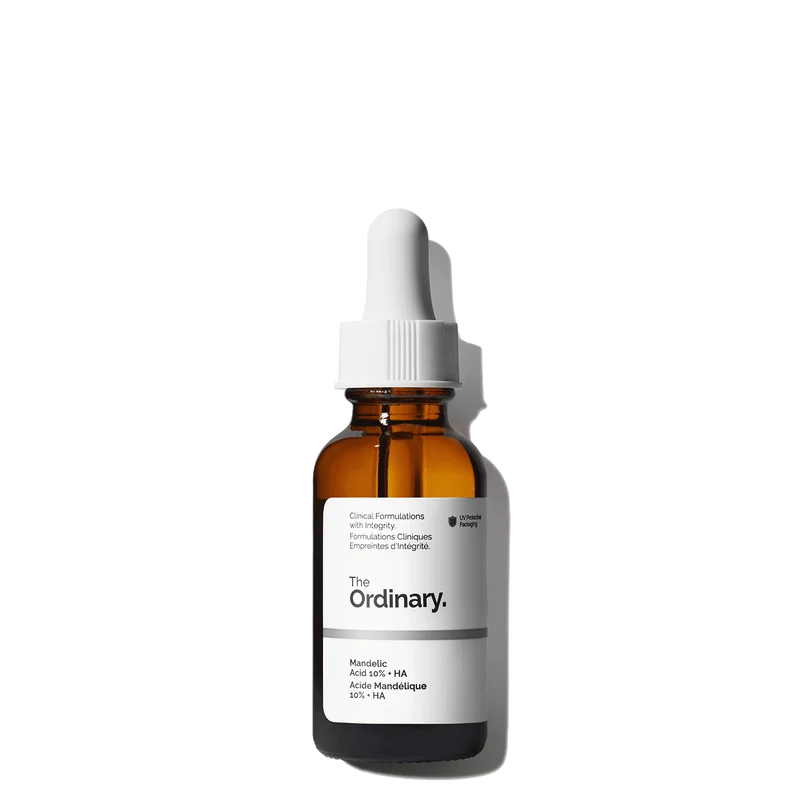
The entry point for clinical mandelic acid. A leave-on serum at 10% with hyaluronic acid added for hydration support. The pH sits at 3.5-4.5, which is low enough to activate the acid but not so low that barrier disruption becomes a concern.
The formula is water-based, alcohol-free, silicone-free, and vegan. The hyaluronic acid counteracts the moisture loss that can accompany regular AHA use. At $7.80 for 30ml, it is the most affordable clinically relevant mandelic acid on the market.
One reviewer on Reddit documented the result: “Dark acne scars were significantly clearer within 2 weeks of use.” Another: “I do find it very gentle to apply. I don’t get any tingling like I do with glycolic and lactic acids. But I also find it very effective.”
Ideal for daily evening use, 2-3 nights per week for beginners, with escalation to nightly use once tolerance is established. Not suitable for skin with compromised barrier or active inflammation.
MUAC 25% Mandelic Acid At-Home Peel: $6.99 to $21.99
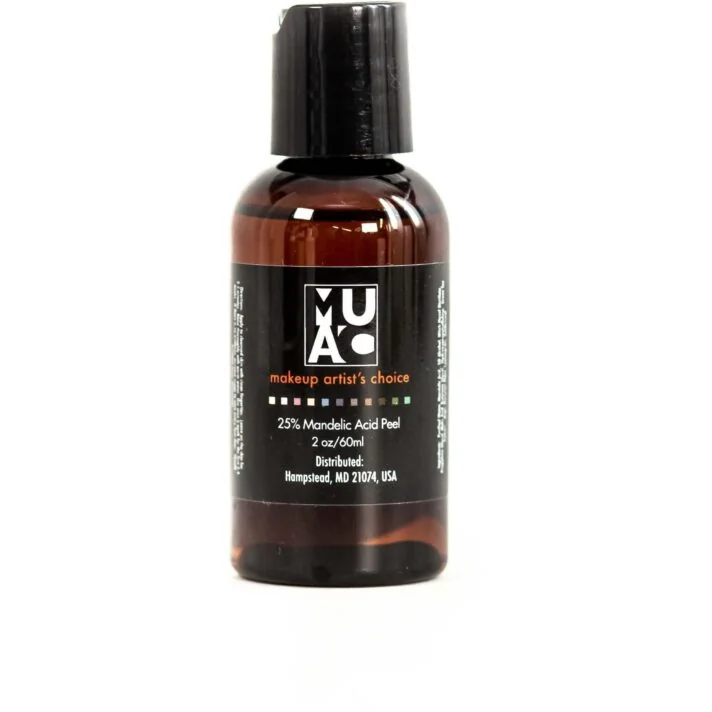
Makeup Artists’ Choice runs a professional-grade at-home peel at 25% mandelic acid, manufactured in FDA-registered labs in the USA. The watery consistency is applied with a cotton pad or gauze, left on for five to ten minutes, then rinsed thoroughly.
The supporting formula includes witch hazel distillate, malic acid as a secondary exfoliant, and botanical extracts (green tea, hops, horsetail, lemongrass, and goldenseal) for antioxidant and soothing properties.
This is where mandelic acid gets serious. Twenty-five percent is professional peel territory for most other acids. For mandelic acid, the larger molecular size and slower penetration rate mean that 25% produces strong results without the recovery period that a 25% glycolic or lactic peel would require. Users typically report minimal visible peeling: the exfoliation happens subtly over several days rather than in the dramatic flaking associated with stronger acids.
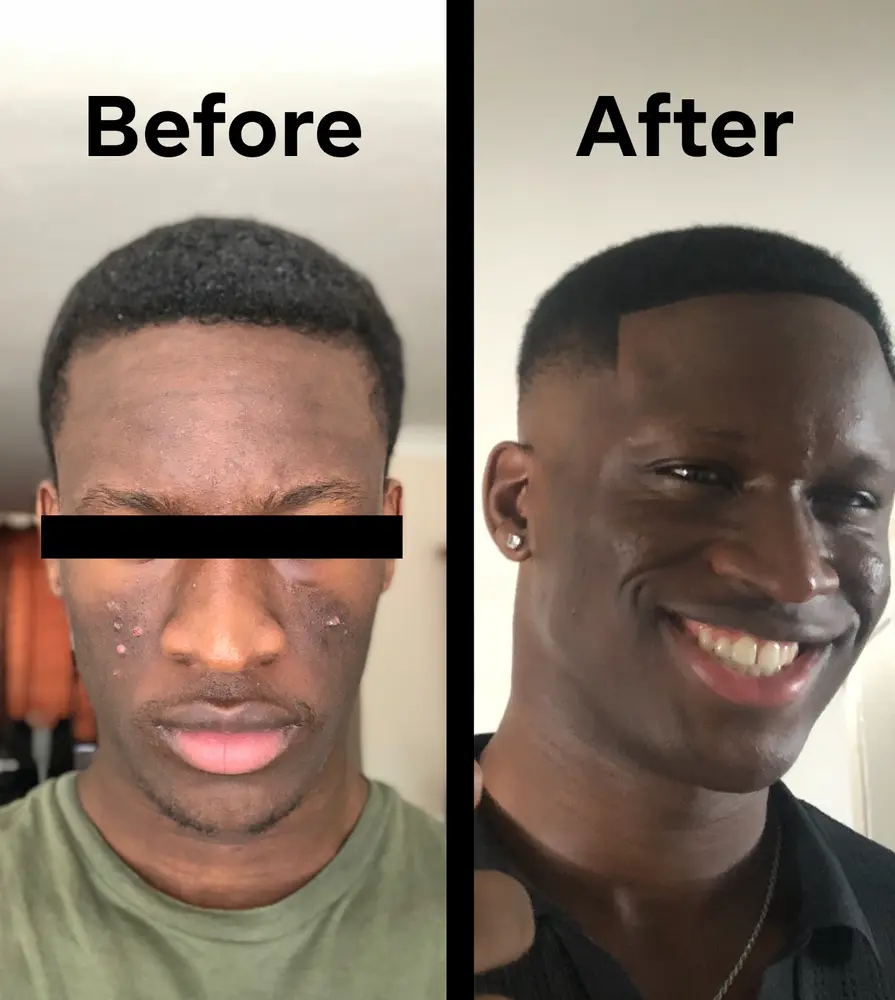
From the community: “One of the ONLY peels safe for brown skin.” Another user documented visible improvement in hyperpigmentation across a series of weekly treatments. The product carries a 4.8/5 rating from 389 reviews, with over 80% at five stars.
The protocol: once weekly for 8-10 weeks. Patch test first. Avoid retinoids and benzoyl peroxide for 24 hours before and after treatment. Strict SPF 50+ the following morning.
Before and after from a documented user:
Sofie Pavitt Mandelic Clearing Serum: $54
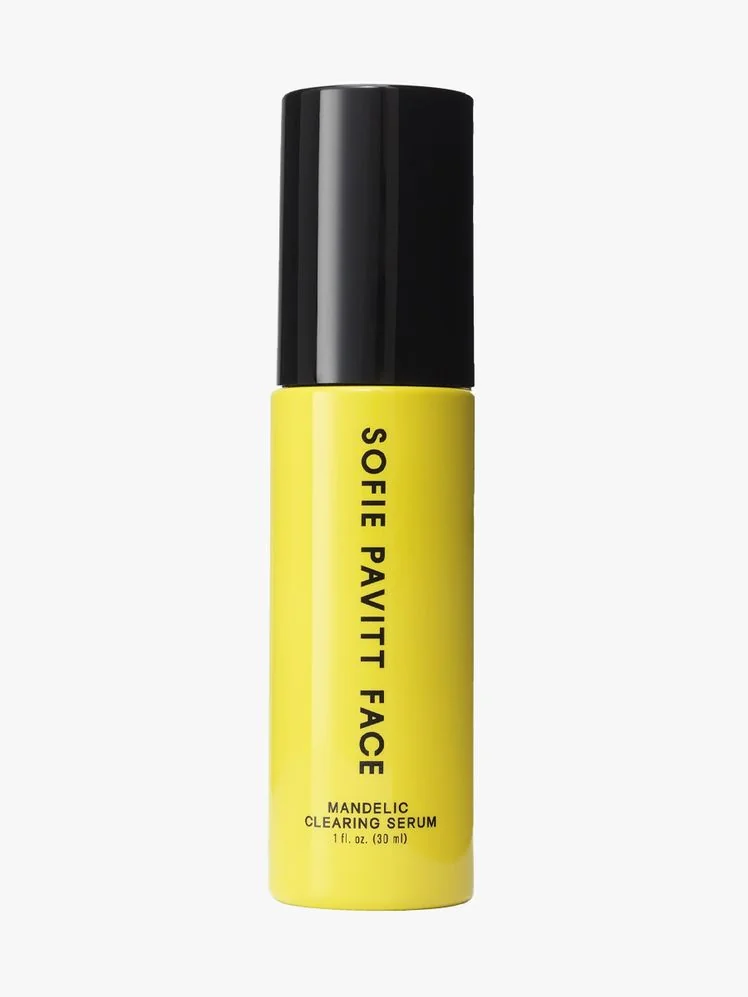
New York aesthetician Sofie Pavitt formulated this serum at 8% mandelic acid, a concentration calibrated specifically for acne-prone skin that is also dealing with hyperpigmentation. The gentler percentage makes daily use realistic for skin that reacts to stronger formulas, and the addition of hyaluronic acid prevents the dryness that can trigger rebound oil production in oily or combination skin.
The Cosmo Acne Award winner. One editor using it for several months noted clearing of hormonal chin breakouts alongside improvement in overall skin tone and clarity.
The trade-off: 8% is maintenance-level for hyperpigmentation treatment. Users dealing with significant or stubborn discoloration will see results, but they will take longer than a 10% or 12% formula. This product makes most sense for skin that wants the dual benefits of acne and pigmentation management without the commitment of a stronger acid routine.
Before and after from a documented user (Naturium Mandelic 12% (same concentration class for reference)):

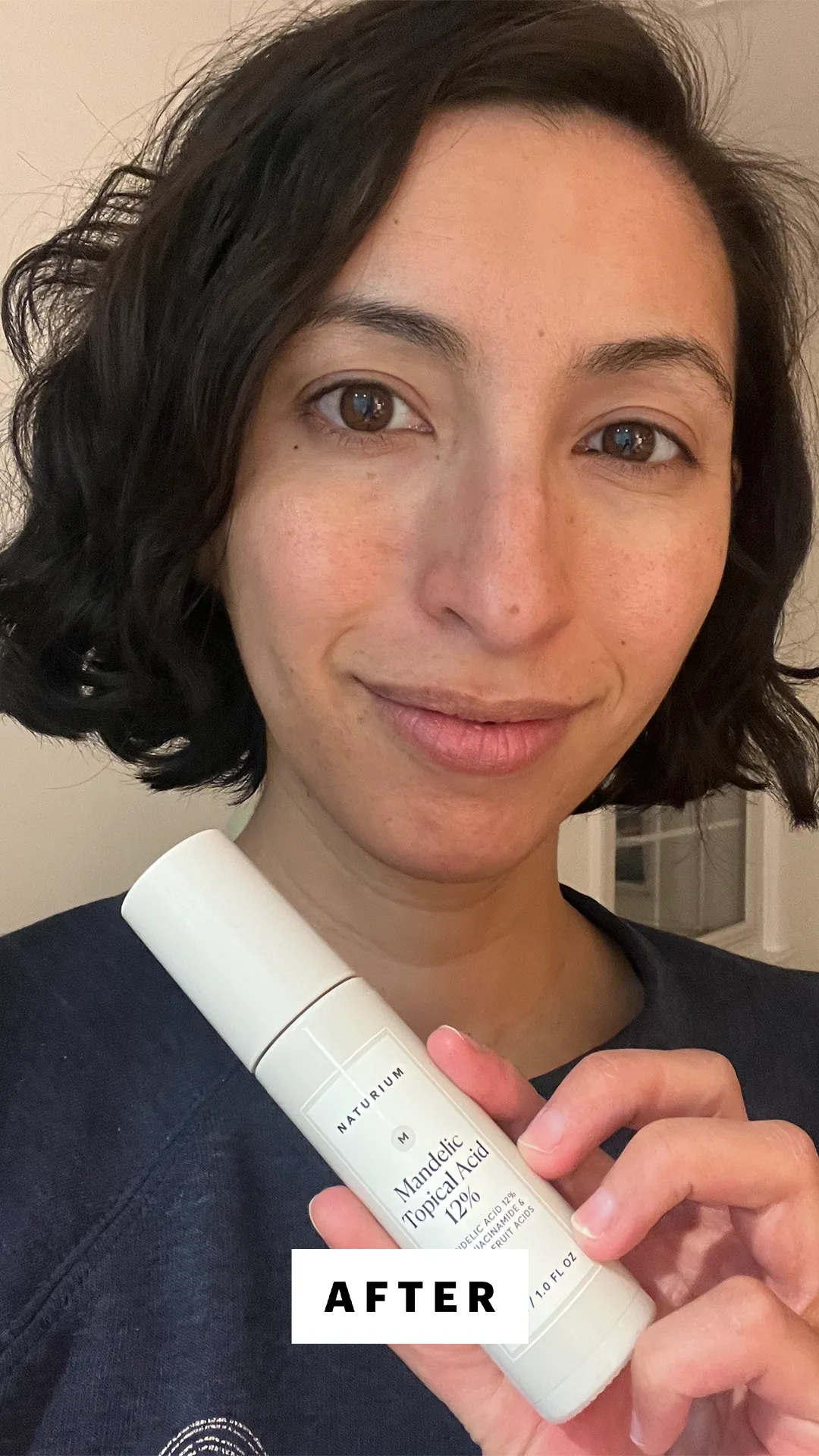
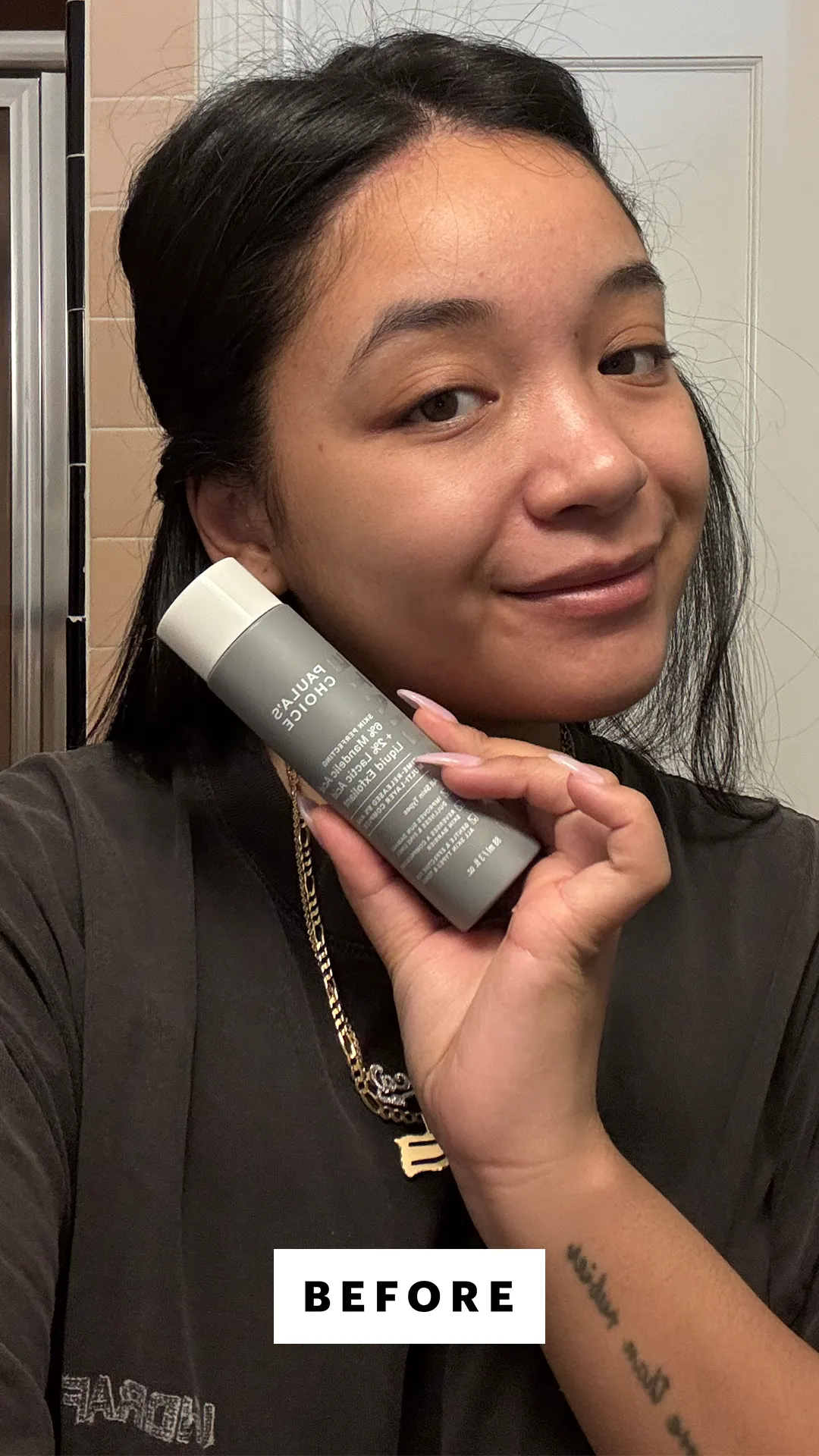
Paula’s Choice 6% Mandelic Acid + 2% Lactic Acid: $26
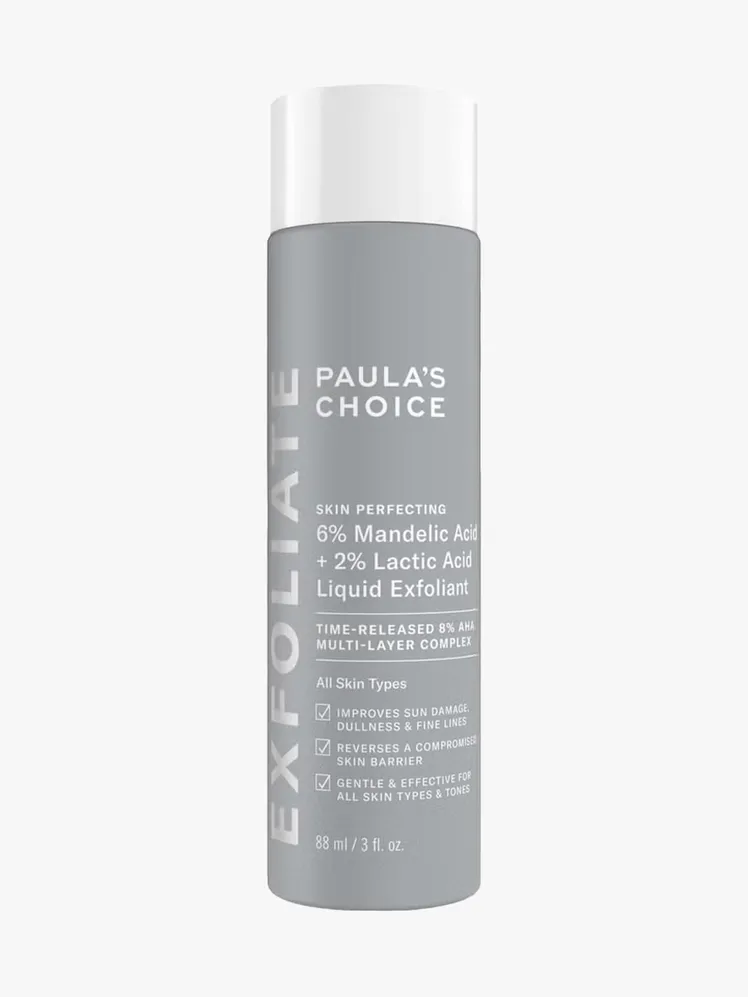
A dual-AHA approach: 6% mandelic acid paired with 2% lactic acid in a toner consistency. The logic is complementary penetration depths. Mandelic acid’s larger molecule works in the upper layers of the stratum corneum while lactic acid penetrates slightly deeper. The combined effect covers more of the skin’s surface area and cell turnover zones simultaneously.
The formula includes glycerin and squalane as hydrators, which makes it realistic for daily use without the dryness associated with higher-concentration exfoliants. Thin enough to apply with a cotton pad or directly with fingers.
One Cosmo editor testing the product reported that it “smooths fine lines, fades dark spots, and improves the overall look of my skin and tone and texture but with legit zero irritation.”
The limitation is concentration. At 6% mandelic, this is a daily-use maintenance product rather than an active treatment. Users seeking meaningful pigmentation reduction will want to supplement with a stronger formula or use this as a daily layer alongside a weekly peel.
Before and after from a documented user with Richards before and after photos:

Vivant Mandelic Acid 3-in-1 Exfoliating Cleanser: $30
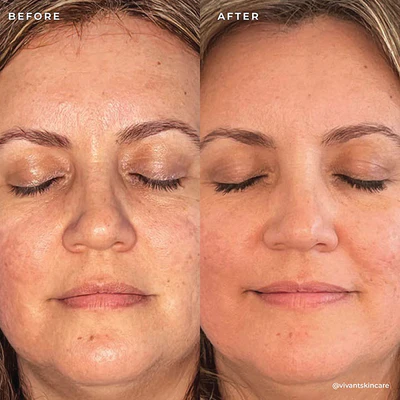
Vivant Skin Care was founded by Dr. James E. Fulton, the dermatologist who co-developed tretinoin (Retin-A). The 3-in-1 cleanser combines chemical exfoliation via mandelic acid with gentle mechanical exfoliation through biodegradable plant-based microbeads. Green tea, grape extract, kiwi fruit, and honey contribute antioxidant and humectant properties.
The format (cleanser plus exfoliant) suits those who want to simplify their routine. The mandelic acid performs its work during the brief contact time, and the microbeads provide surface-level physical exfoliation.
Effective for daily cleansing with mild exfoliation, but the short contact time of a wash-off product limits the depth of acid penetration compared to a leave-on serum. Ratings average 4.91/5 from 105 reviews. Most appropriate as an entry point or maintenance product rather than primary hyperpigmentation treatment.
How Mandelic Acid Compares to Other Hyperpigmentation Actives
| Active | Mechanism | Molecular Weight | Speed | Irritation Risk | Best For | Darker Skin Safety |
|---|---|---|---|---|---|---|
| Mandelic Acid | Tyrosinase inhibition + exfoliation + anti-inflammatory | 152 Da | Moderate | Low | PIH, acne marks, all-round pigmentation | Excellent |
| Glycolic Acid | Tyrosinase inhibition + exfoliation | 76 Da | Fast | High | Sun damage, resilient skin, deep peels | Use caution |
| Lactic Acid | Tyrosinase inhibition + exfoliation + humectant | 90 Da | Moderate | Medium | All skin types, dryness concerns | Good |
| Azelaic Acid | Tyrosinase inhibition + anti-inflammatory + antimicrobial | ~188 Da | Slow | Low-medium | Melasma + acne, rosacea | Excellent |
| Tranexamic Acid | Anti-inflammatory + melanin transfer inhibition | 131 Da | Slow | Very low | Hormonal melasma, sensitive skin | Excellent |
| Kojic Acid | Tyrosinase inhibition | Small | Fast | Medium-high | Age spots | Use caution |
| Alpha-Arbutin | Tyrosinase inhibition | Variable | Slow | Very low | Mild brightening | Excellent |
The critical comparison is mandelic versus glycolic. Glycolic acid is not better at treating hyperpigmentation; it is simply more aggressive. In clinical use, glycolic acid’s smaller molecular size means it penetrates faster and deeper, which can produce faster results on resilient skin but also a higher risk of irritation-triggered PIH in skin of color. For anyone with melanin-rich skin or a history of post-inflammatory hyperpigmentation, mandelic acid is the more reliable choice precisely because it will not cause the kind of inflammatory response that creates new pigmentation.
Tranexamic acid and azelaic acid are better choices specifically for hormone-driven melasma, particularly when UV exposure is an ongoing factor. They work through anti-inflammatory pathways that address the hormonal component of melanocyte stimulation. Mandelic acid pairs well with both.
How Mandelic Acid Serums Are Made
Understanding the manufacturing process helps explain why concentration and pH matter so much, and why different products at the same percentage can behave differently.
Pharmaceutical and cosmetic grade mandelic acid is produced through one of two routes:
Synthetic synthesis: The most common commercial method. Chemists synthesize mandelic acid from benzaldehyde or related precursor compounds through a controlled reaction with sodium bisulfite followed by potassium cyanide, or via enzymatic synthesis in modern pharmaceutical manufacturing. The resulting compound is purified to greater than 99% purity through recrystallization.
Plant-derived extraction: Mandelic acid can also be obtained from bitter almonds via hydrolysis of amygdalin, the naturally occurring glycoside. This is the historical origin of the compound. Plant-derived mandelic acid is chemically identical to synthetic mandelic acid and performs identically in formulations, but carries a small risk for individuals with tree nut allergies.
Both routes produce the same racemic mixture of R and S enantiomers, which is what creates mandelic acid’s characteristic gentle behavior (S-mandelic acid alone would penetrate more rapidly; the mixture slows distribution).
In finished serum formulations, mandelic acid must be buffered to a pH between 3.0 and 4.5 for efficacy. Below pH 3.0, irritation increases sharply. Above pH 4.5, the acid becomes less effective as an exfoliant because it transitions from its active acidic form to a salt. The Ordinary’s 10% formula sits at pH 3.5-4.5, which represents the practical sweet spot for daily-use consumer products.
Concentration stability is managed through preservatives and antioxidants. The Tasmannia Lanceolata (pepperberry) extract in The Ordinary’s formula, for instance, serves a dual purpose: it provides additional antioxidant activity and helps maintain formulation stability over the product’s shelf life.
A Practical Protocol for Hyperpigmentation
Starting Out (Weeks 1-4)
- Evening only: Apply 2-3 nights per week
- Concentration: 5-10%
- Formula type: Leave-on serum (The Ordinary 10% or equivalent)
- Follow with: Moisturizer to offset any dryness
- Morning: SPF 50+ broad-spectrum, applied generously to all treated areas
This phase establishes tolerance. Expect mild exfoliation, slight tingling on application, and possibly a purging phase during weeks 2-4 if pores are clogged. Purging (small breakouts surfacing from accelerated cell turnover) typically lasts one complete skin cycle, which is 28-40 days. It is not a reaction to the product; it is the product working on subsurface congestion.
Established Use (Weeks 5-12)
- Evening: 4-6 nights per week at 10-15%
- Optional weekly addition: 25% rinse-off peel (MUAC or equivalent) once per week, applied for 5-7 minutes, followed by thorough rinsing
This phase is where visible pigmentation reduction happens. Expect measurable improvement in dark spots and skin tone by week 8-10 with consistent use.
Maintenance (Month 3 onwards)
- Daily 8-10%: Leave-on serum, nightly
- Monthly: Higher-concentration peel for resurfacing
- Ongoing: SPF 50+ daily without exception: mandelic acid increases UV sensitivity, and sun exposure will rebuild pigmentation faster than the acid can remove it
The SPF Rule Is Not Optional
Every alpha-hydroxy acid, including mandelic acid, increases the skin’s sensitivity to UV radiation. The exfoliation removes the outer cell layers that provide some incidental UV protection, and the accelerated cell turnover produces fresher, more UV-vulnerable cells at the surface.
Using mandelic acid without daily SPF 50+ broad-spectrum protection does not just reduce results; it can reverse them. Melanocytes responding to UV exposure will produce new pigmentation to replace what the acid has cleared. The net result is wasted effort at best, worsening hyperpigmentation at worst.
This is particularly true for melasma, which has a UV-driven component. No amount of mandelic acid will produce lasting results for melasma if the person using it is not wearing sunscreen every day, indoors and outdoors.
What Mandelic Acid Will Not Fix
Honesty matters here. The r/30PlusSkinCare community asked directly: “Why don’t I see mandelic acid recommended very often?” The most upvoted response noted that mandelic acid “is not going to make a huge difference” with deep, established hyperpigmentation that is driven by hormones or genetics rather than surface-level pigmentation.
Melasma, in particular, responds inconsistently. The hormone-driven version of melasma lives in the dermis, not just the epidermis, and no exfoliating acid, regardless of concentration, reaches the dermis meaningfully through topical application. For deep or hormone-driven melasma, prescription-strength treatments (hydroquinone, tretinoin, azelaic acid at prescription strength) combined with laser or IPL procedures produce better outcomes than OTC acids alone.
Post-inflammatory hyperpigmentation from severe or cystic acne may also require stronger intervention. Users who have been on tretinoin for a year without seeing improvement from mandelic acid are likely dealing with deeper dermal pigmentation that needs prescription-grade retinoid penetration rather than surface exfoliation.
The appropriate use case for mandelic acid is surface-level hyperpigmentation: the flat brown marks left by healed acne, mild to moderate sun damage, and uneven skin tone in the outer epidermal layers. This covers the majority of pigmentation concerns most people experience, which is why the product category is so effective for such a wide range of users. But knowing the limits means knowing when to stop the OTC protocol and see a dermatologist.
Final Summary
Mandelic acid for hyperpigmentation occupies an unusual position: physically large enough to be gentle, chemically active enough to inhibit melanin production, and anti-inflammatory enough to prevent new PIH while clearing existing pigmentation. This profile makes it uniquely suitable for consistent long-term use on hyperpigmented skin.
The evidence base is solid. The 1999 melasma study, the 2019 acne peel RCT, and the 2025 periorbital melanosis trial all confirm meaningful efficacy with an acceptable safety profile. The community data from thousands of documented real-world experiences on Reddit confirms that 10% leave-on serums work for PIH and dark marks in 8-12 weeks, and that 25% at-home peels produce more dramatic results for stubborn pigmentation in darker skin tones.
The product picks: The Ordinary 10% + HA for daily use at $7.80, MUAC 25% for weekly peel protocol at $7-22 per session, and Paula’s Choice 6%/2% lactic dual-AHA for gentle daily maintenance. Each covers a different intensity of use; the combination of daily 10% serum and weekly 25% peel covers most cases of moderate hyperpigmentation without clinic-level intervention.
The mandatory conditions for results: consistent use over 8-12 weeks minimum, SPF 50+ every morning without exception, and realistic expectations about melasma’s complexity compared to PIH.
Sources
- Clinical Study: 30% Mandelic Acid vs 30% Lactic Acid in Periorbital Melanosis (PMC 2025)
- PubMed: 45% Mandelic Acid vs 30% Salicylic Acid in Acne Vulgaris (2019)
- PubMed: Topical Mandelic Acid Effects on Skin Elasticity (2019)
- Healthline: Benefits and Uses of Mandelic Acid
- Dr. David Jack: Best Skincare Ingredients for Pigmentation Issues
- Vivant Skin Care: Why Mandelic Acid is the Perfect Choice for Hyperpigmentation-Prone Skin
- Paula’s Choice EU: Mandelic Acid – What is it and how can I use it
- Rhonda Allison: Ingredient Spotlight – Mandelic Acid
- Reddit r/Blackskincare: Dark Spots and Hyperpigmentation Guide
- Reddit r/30PlusSkinCare: Why don’t I see Mandelic acid recommended very often?
- Reddit r/SkincareAddicts: Before-and-after with 40% Mandelic Acid Peels for Melasma