How to Read COA for Topical Peptides

How to Read COA for Topical Peptides Like an Expert: 2026 Guide

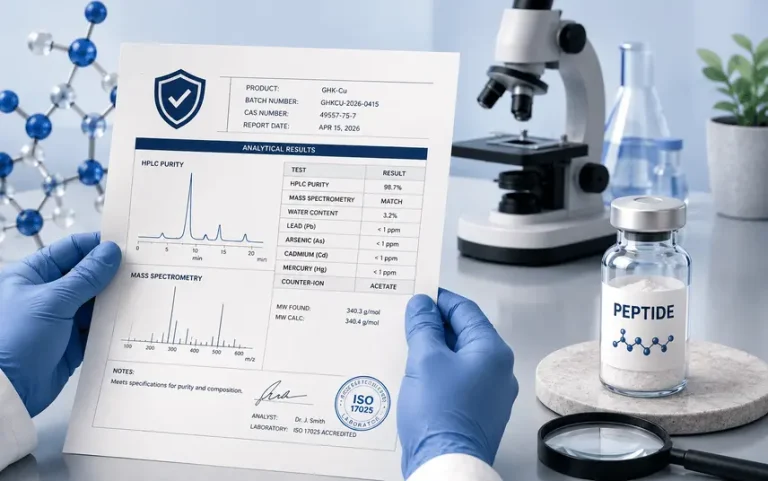
A Certificate of Analysis (COA) is the lab’s record of what was in one tested batch: identity, purity and, on better reports, contaminants. For topical peptides it is often the only quality check you get, because the FDA doesn’t pre-approve cosmetic ingredients. So you are trusting the manufacturer, and the COA is your main protection …

Read more

Types of Research Peptides

Types of Peptides: 6 Research Classes and What Each Does (2026)

Research peptides are synthetic amino acid chains used in experimental settings, not approved medicines. They fall into six types: healing and repair, growth-hormone secretagogues, metabolic, mitochondrial, cognitive and cosmetic. For which peptides have the strongest human evidence, see best peptides by goal. Knowing the type tells you what a peptide was studied for and how …

Read more

Bacteriostatic Water for Peptides

Bacteriostatic Water for Peptides: Where to Buy and FDA Rules

Bacteriostatic water is sterile water with 0.9% benzyl alcohol added as a preservative, which lets a multi-dose vial be punctured more than once (1). Hospira’s version is a prescription drug, and in August 2026 FDA told a peptide seller that its bacteriostatic water “is a drug” (2). This page covers what the label says, where …

Read more

hydroxy kratom chewable tablets

Kratom Chewable Tablets: Leaf vs Extract and What to Check

Kratom chewable tablets come in two kinds, and the label often doesn’t say which. One is pressed leaf. The other is extract. That difference sets how strong the tablet is and whether it’s even legal to sell. Leaf tablets and extract tablets A 2026 review of kratom products found native leaf has the lowest total …

Read more