
If nerve pain keeps you up at night, you’ve probably heard podcasters mention ARA-290: a peptide that regrows nerves.
That’s half right.
In a 2017 trial of 64 people, four weeks of ARA-290 (cibinetide) grew measurable growth of nerve fibres in the eyes and skin. The company went silent. The drug was never approved. No trials since 2016.
What’s left is this 11-amino acid research chemical easy to fake sold online.
The short answer: ARA-290 has real human evidence for one kind of nerve pain, small-fibre neuropathy. For almost everything else it’s searched for, the evidence is thin or doesn’t exist.
This page gives you the three things most ARA-290 pages bury or skip:
- Your condition, graded. Neuropathy, sciatica, fibromyalgia, MS, carpal tunnel and six more, each marked as human evidence, animal only, or nothing.
- Every human trial in one table, with numbers taken from the original papers.
- What vendor certificates actually prove. We read four. They don’t prove the same things.
Short on time? Jump to the evidence map.
| Other names | Cibinetide, ARA 290, pHBSP (pyroglutamate helix B surface peptide) |
|---|---|
| Sequence | pGlu-Glu-Gln-Leu-Glu-Arg-Ala-Leu-Asn-Ser-Ser |
| Molecular weight | 1,257.3 g/mol (monoisotopic mass 1,256.6 Da) |
| Origin | Helix B of erythropoietin (EPO) |
| Target | Innate repair receptor (EPO receptor + CD131) |
| Half-life in blood | About 2 minutes |
| Highest trial phase | Phase II: five patient trials, 182 people |
| Typical trial design | Randomised, placebo-controlled, 28 days |
| Status | Not approved. US orphan drug and fast track designations for sarcoidosis nerve pain (2017). No Phase III; the developer appears to have shut down. |
What Is ARA-290?
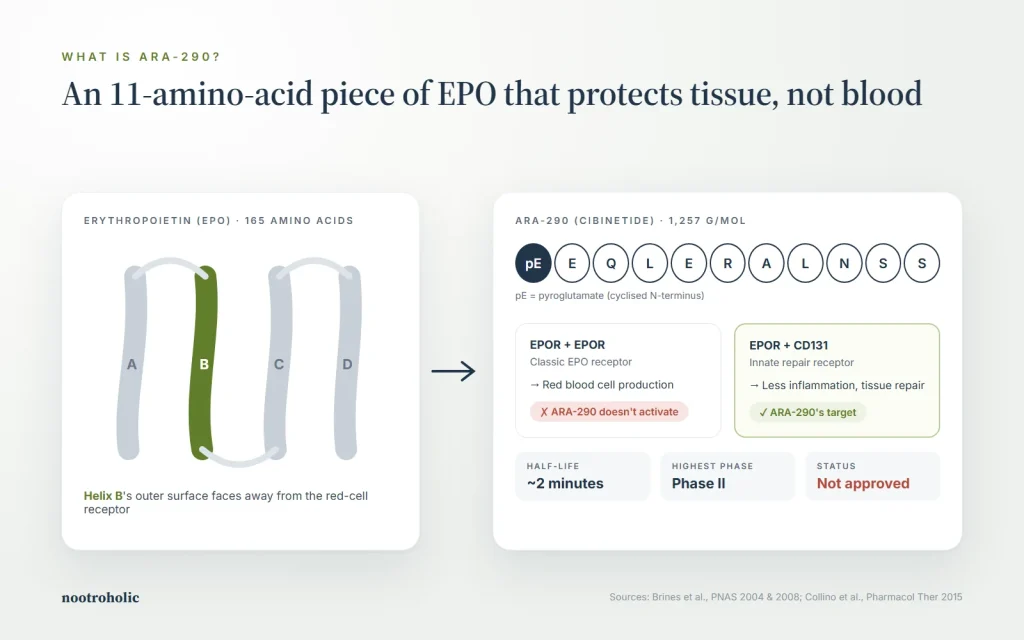
A synthetic peptide formed on erythropoietin helix B. EPO (erythropoietin) is a naturally present protein which helps the body produce red blood cells.
ARA-290 copies the tissue-protective nature of this section without imitating the blood-cell-stimulating properties. Activates the body’s own repair receptors to dampen inflammation and support tissue repair.
Araim Pharmaceuticals made it and named it Cibinitide.
How ARA-290 differs from EPO
EPO is a hormone primarily made by the kidneys. It’s the natural protein that drugs like epoetin are engineered to imitate. The body can make more red blood cells when it binds to EPO receptors in the bone marrow. Some types of anemia benefit from it, but blood doping is problematic. Increased red-cell levels can increase blood viscosity and blood clot risk.
ARA-290 doesn’t work on those receptor pairs because it’s too small to bind so blood counts don’t change much. It clears from the blood in just two minutes, yet the effects last for days to weeks. Researchers believe it flips a switch inside cells rather than remaining in circulation.
| EPO (epoetin) | ARA-290 (cibinetide) | |
|---|---|---|
| Size | 165 amino acids, glycoprotein | 11 amino acids |
| Receptor | EPO receptor pair (homodimer) | Innate repair receptor (EPOR + CD131) |
| Red blood cells | Raises haemoglobin | No clinically significant change |
| Half-life | Hours | About 2 minutes |
What the Human Trials Show
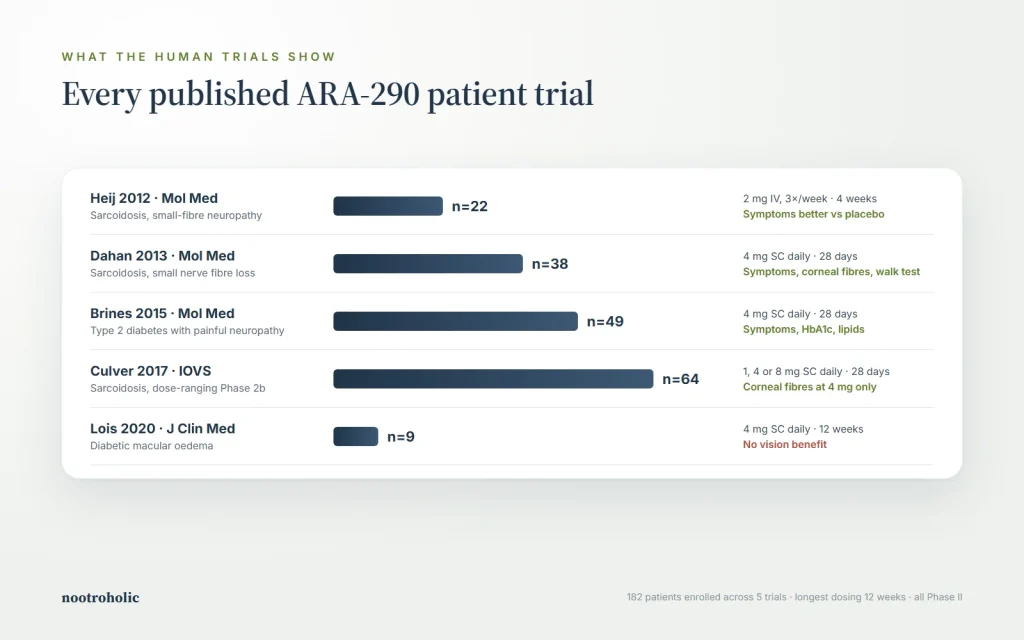
Here are all published patient trials, with numbers.
Only the macular oedema study was placebo-controlled.
| Trial | Population | n | Dose and route | Duration | Main endpoint | Result |
|---|---|---|---|---|---|---|
| Heij 2012, Mol Med [4] | Sarcoidosis with small-fibre neuropathy symptoms | 22 (12 drug, 10 placebo) | 2 mg IV, 3× a week | 4 weeks | Neuropathy symptom score (SFNSL), pain, quality of life | SFNSL fell 11.5 points vs 2.9 on placebo (p < 0.05). Pain and fatigue improved equally in both groups. |
| Dahan 2013, Mol Med [5] | Sarcoidosis with small nerve fibre loss | 38 (21 drug, 17 placebo) | 4 mg SC daily | 28 days | Symptoms, corneal nerve fibres, walking distance | SFNSL −12.2 vs −3.8 points. Corneal nerve fibre area +14.5% (p = 0.022). 6-minute walk +18.7 m vs −15.1 m (p = 0.049). |
| Brines 2015, Mol Med [6] | Type 2 diabetes with painful neuropathy | 49 (48 analysed) | 4 mg SC daily | 28 days + 28 days follow-up | HbA1c, neuropathic symptoms (PainDetect), corneal fibres | HbA1c −0.21% vs +0.21% at day 56 (p = 0.002). PainDetect −4.2 vs −0.7 points (p = 0.037). Corneal fibre density up in people with low baseline. |
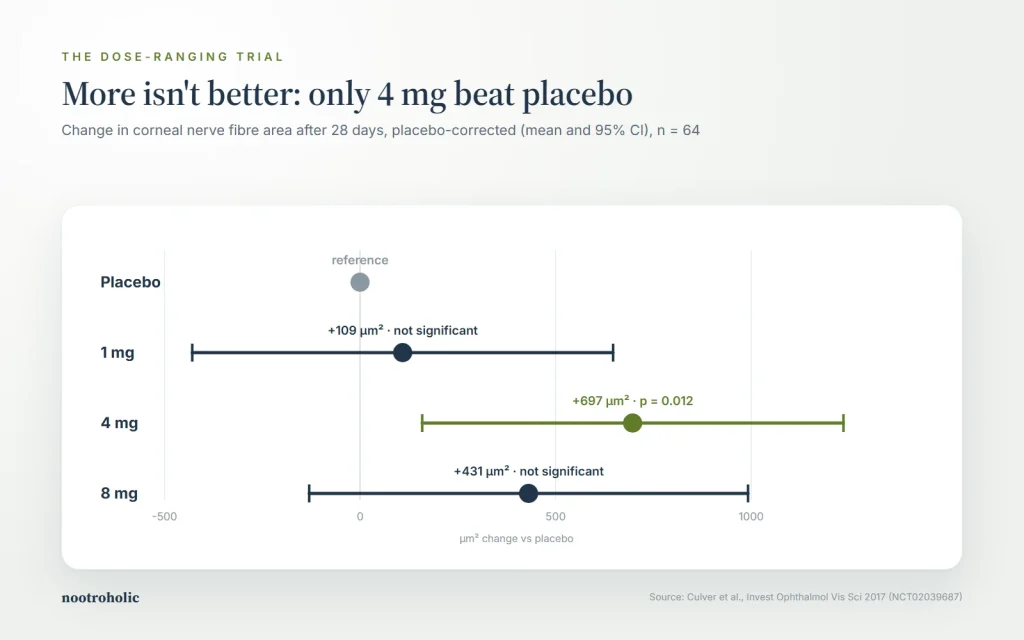
| Culver 2017, IOVS [7][8] | Sarcoidosis with nerve fibre loss and neuropathic pain | 64 | 1, 4 or 8 mg SC daily vs placebo | 28 days | Corneal nerve fibre area | 4 mg: +697 µm² vs placebo (p = 0.012). 1 mg and 8 mg not significant. Pain fell in every group, placebo included. |
| Lois 2020, J Clin Med [9] | Diabetic macular oedema | 9 (no placebo) | 4 mg SC daily | 12 weeks | Visual acuity, retinal thickness | No improvement in vision (−2.9 letters) or retinal thickness. No serious adverse events. |
A summary of what it all means
Consistent signal. ARA-290 beat placebo in all three neuropathy trials. Skin biopsies showed more regenerating fibres at 4 mg (GAP-43, p a= 0.035). Patients with the most corneal fibres walked the furthest.
There are some limitations. Pain itself did not clearly beat placebo in the largest trial. Symptoms aren’t caused by corneal fibres. Araim staff coauthored all neuropathy papers. No one has shown that the benefit persists beyond 16 weeks.
In total: 182 patients, about 110 of them on the drug, mostly for 28 days. No one has taken it for longer than 12 weeks.
Does ARA-290 Work for Your Condition? The Evidence Map
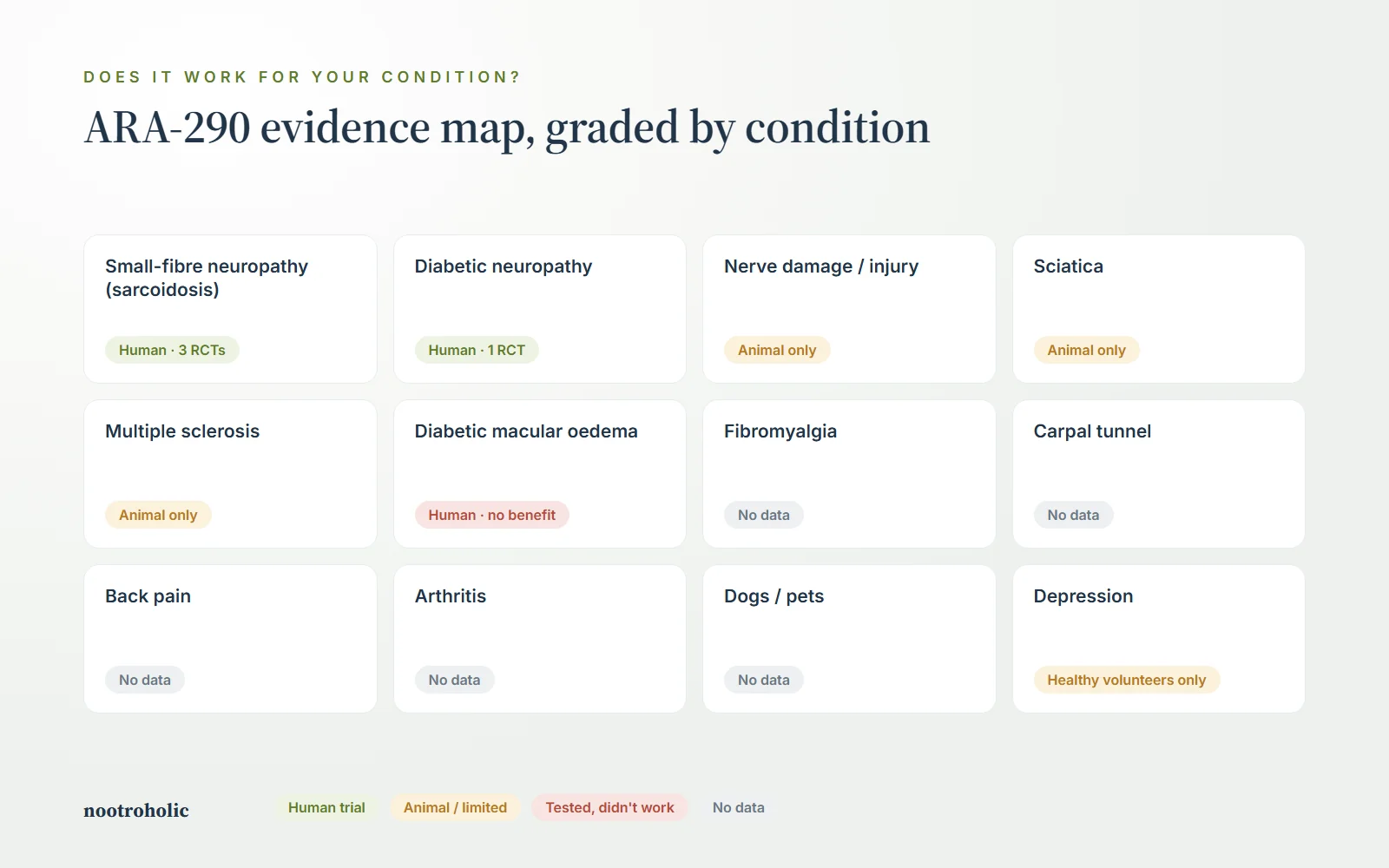
The majority of people interested in ARA-290 have one condition in mind.
✅ = controlled human trial
🐭 = animal or lab data only
❌ no published ARA-290 study.
| Condition | Human evidence | Animal / lab evidence | Verdict |
|---|---|---|---|
| Small-fibre neuropathy (sarcoidosis) | 3 RCTs, 124 people [4][5][7] | Yes | ✅ Best evidence, still Phase II |
| Diabetic neuropathy | 1 RCT, 49 people [6] | Diabetic rats [19] | ✅ Promising, one trial |
| Nerve damage / nerve injury | Indirect: small-fibre regrowth in neuropathy trials | Sciatic crush and nerve injury in rats [11][14] | 🐭 Animal only for injury |
| Sciatica | None | Sciatic nerve injury and neuritis models [11][13] | 🐭 Animal only |
| Multiple sclerosis (MS) | None | EAE rat model [20] | 🐭 Animal only |
| Fibromyalgia | None | None | ❌ None |
| Carpal tunnel syndrome | None | None | ❌ None |
| Back pain | None | None for back pain itself | ❌ None |
| Arthritis | None | None found | ❌ None |
| Dogs and other pets | None | Rodent studies only | ❌ None |
| Diabetic macular oedema | 1 open trial, 9 people [9] | Diabetic rat retina [18] | Tested; didn’t help |
ARA-290 for neuropathy. Human evidence is strong here. It’s narrow and covers small-fibre neuropathy: the burning, tingling, or “feet on fire” type that harms the thinnest pain and temperature nerves. Neuropathy caused by B12 deficiency or chemotherapy, for example, wasn’t tested.
ARA-290 for nerve damage. In rats, ARA-290 calms inflammation in Schwann cells, which protect nerves. In human trials, it has been shown that small fibres in corneas and skin regenerate. There’s no evidence that it fixes a cut or compressed nerve.
ARA-290 for sciatica. Usually sciatica is caused by a pinched nerve root. Rats treated with ARA-290 showed less pain after a nerve injury. No drug can remove the mechanical pressure, and there are no human studies.
ARA-290 for fibromyalgia. The idea hasn’t been tested, but it’s not impossible. Meta-analysis found 49% of fibromyalgia patients had small-fiber damage. This is not evidence, but an argument for a trial.
ARA-290 for MS. In rats with EAE, the standard MS animal model, daily ARA-290 made the disease milder and shorter [20]. There are no human data, and there’s no substitute for disease-modifying therapy.
Carpal tunnel, back pain, arthritis and dogs. None of these have been studied.
Most back pain isn’t neuropathic and is caused by compression at the wrist.
Pain from arthritis starts in cartilage and the joint lining, not in nerves. For joints, check our article peptides for joint pain.
Preclinical Research
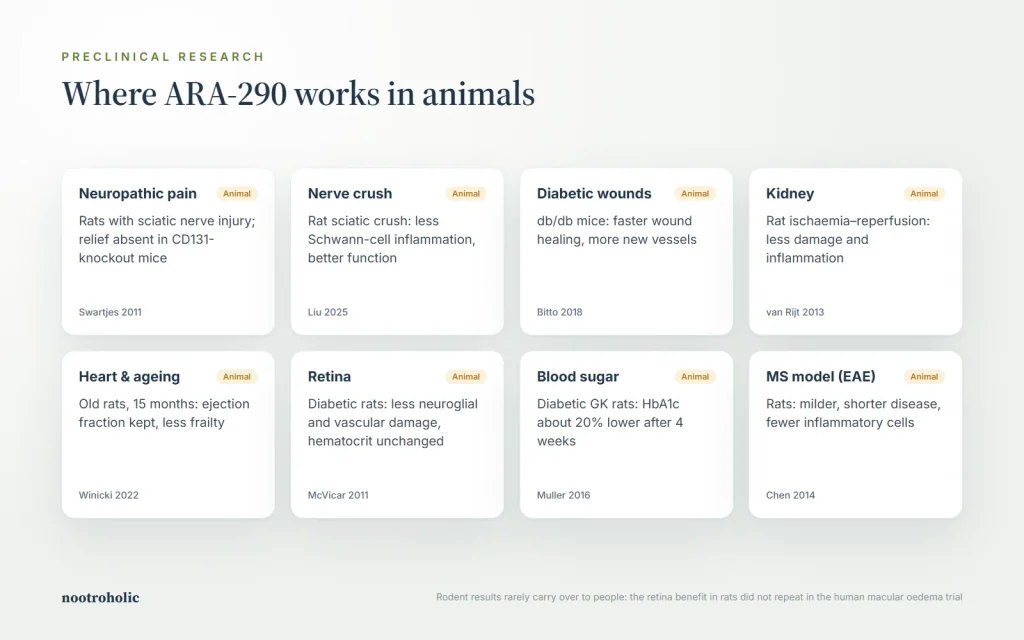
The animal research is broad, as you’d expect for a receptor that responds to injury of any kind. Every finding below comes from rodents Animal.
- Neuropathic pain: after sciatic nerve injury, ARA-290 gave rats long-lasting relief from touch and cold pain. It also calmed microglia, the spinal-cord immune cells that keep pain signals running [11][12].
- Diabetic wounds: in diabetic db/db mice, a daily 30 µg/kg dose sped up wound closure and increased new blood vessel growth [15].
- Kidney: after ischaemia–reperfusion injury in rats, it reduced damage and inflammation, even when given after blood flow returned [16].
- Heart and ageing: old rats treated for 15 months kept their heart’s pumping function, had less cardiac inflammation and were less frail [17].
- Retina: in diabetic rats it protected retinal nerve and blood-vessel cells without changing haematocrit [18]. The human macular oedema trial found no such benefit [9].
- Blood sugar: in type 2 diabetic GK rats, four weeks of treatment cut HbA1c by about 20% by improving insulin release [19].
One caution: two widely cited pHBSP papers have been retracted: a 2012 kidney study and a 2014 insulin-resistance study [24]. If a vendor page cites either, treat its other claims with caution.
Side Effects, Safety and the Cancer Question
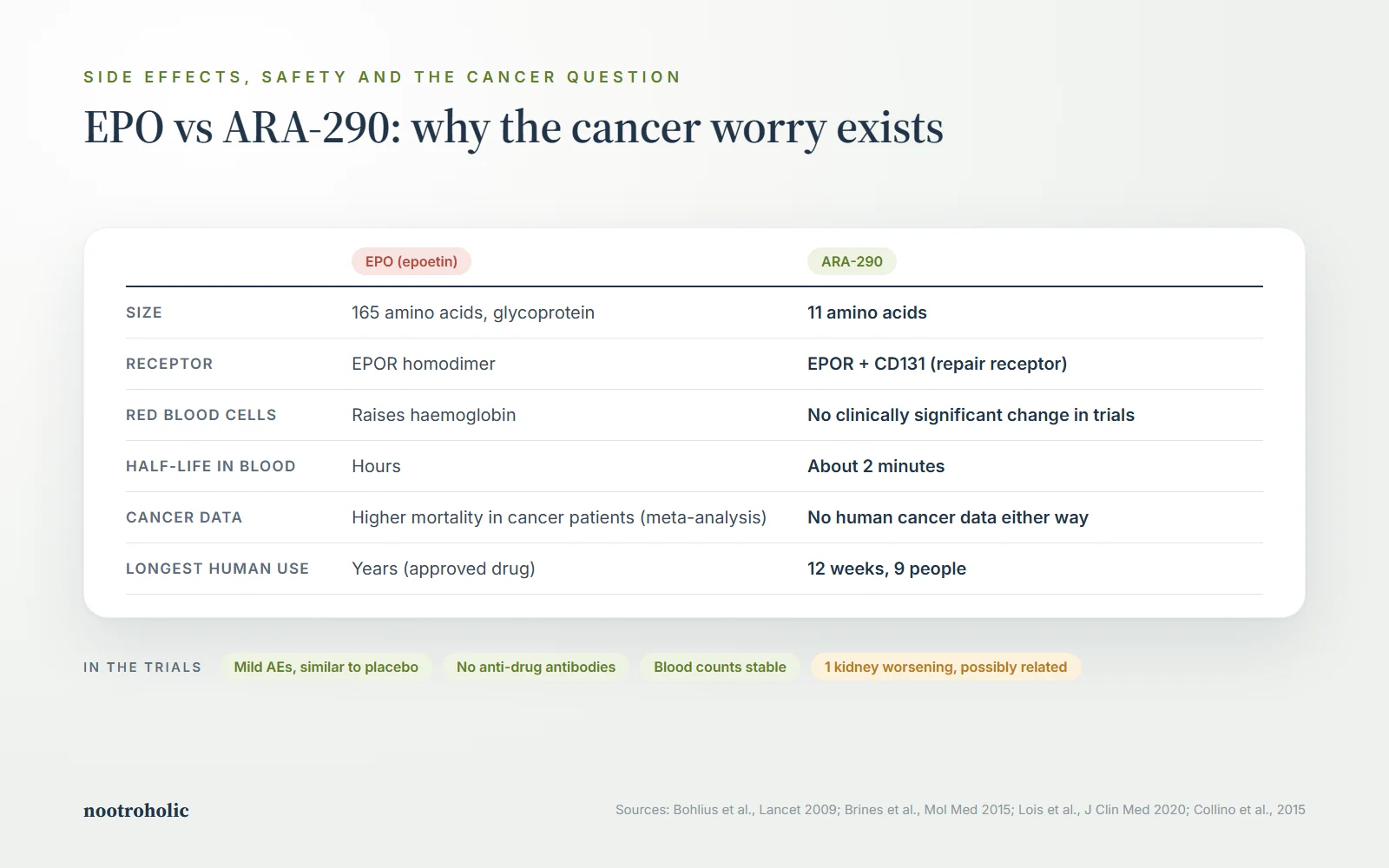
In the trials, ARA-290 was well tolerated Human:
- Sarcoidosis: no safety concerns in the IV pilot, and no serious adverse events in the 28-day trial or its 12-week follow-up [4][5].
- Diabetes: the drug and placebo groups had similar numbers of adverse events. The ARA-290 group had four serious events. One, a worsening of existing kidney disease after a diuretic increase, was judged possibly related. Another, a fatal heart attack in a 70-year-old with severe cellulitis two weeks after the last dose, was judged unrelated [6].
- Macular oedema: headache, raised triglycerides and colds, but no serious events [9].
- Blood and antibodies: no clinically significant change in blood counts, and no anti-drug antibodies in the trials that tested for them [6][9].
What hasn’t been studied matters more. There are no data on repeat courses, pregnancy, children or long-term use. None of the trial safety record applies to a research-grade vial of unknown sterility.
Does ARA-290 cause cancer?
There’s no evidence that ARA-290 causes cancer, and none that it’s safe for people who have cancer. The worry comes from EPO. Across 53 trials and 13,933 cancer patients, EPO-type drugs raised deaths during treatment by 17% [22] Human.
Some of that harm likely comes from higher haemoglobin and clotting, which ARA-290 doesn’t cause. The rest is less reassuring. Some tumours carry EPO receptors, and the innate repair receptor’s job is to keep stressed cells alive. ARA-290 has never been tested in people with cancer. The main sarcoidosis trial excluded anyone who’d had a serious cancer in the previous five years [8].
Who the trials excluded
The trial safety data don’t cover several groups, because researchers left them out [8]:
- People with cancer, active or within the past five years.
- Pregnant or breastfeeding women.
- Anyone who had used EPO or other red-cell-stimulating drugs in the previous two months.
- People with other causes of nerve-fibre loss (except well-controlled diabetes), or with significant abnormalities in their lab results or heart tests.
Kidney function deserves a note too, given the one possibly related case of worsening kidney disease [6]. ARA-290 isn’t named on the WADA Prohibited List, but section S2 covers EPO-receptor agonists and substances with similar effects.
Legal Status and Why Development Stopped
{{IMG:ara-290-legal-status-timeline}}
No regulator has approved ARA-290. In May 2017, Araim announced US orphan drug designations for sarcoidosis and its nerve pain, US fast track status, and EU orphan designations [23]. Those designations help a drug through development. They don’t approve it.
Araim said broader neuropathy trials would follow, but none did. No Phase III was ever registered, and the last cibinetide trial, a macular oedema study in Belfast, began in 2016. Araim appears to have shut down, and no company is known to be developing the drug. Small biotechs often stall here because Phase III costs far more than Phase II. It doesn’t mean the drug failed.
For buyers, that means three things:
- You can’t get pharmaceutical-grade ARA-290 on prescription.
- Every vial online is a research chemical labelled “not for human use”.
- The only quality check between the factory and your vial is the vendor’s certificate of analysis (COA).
Buying ARA-290: How to Check a Vial
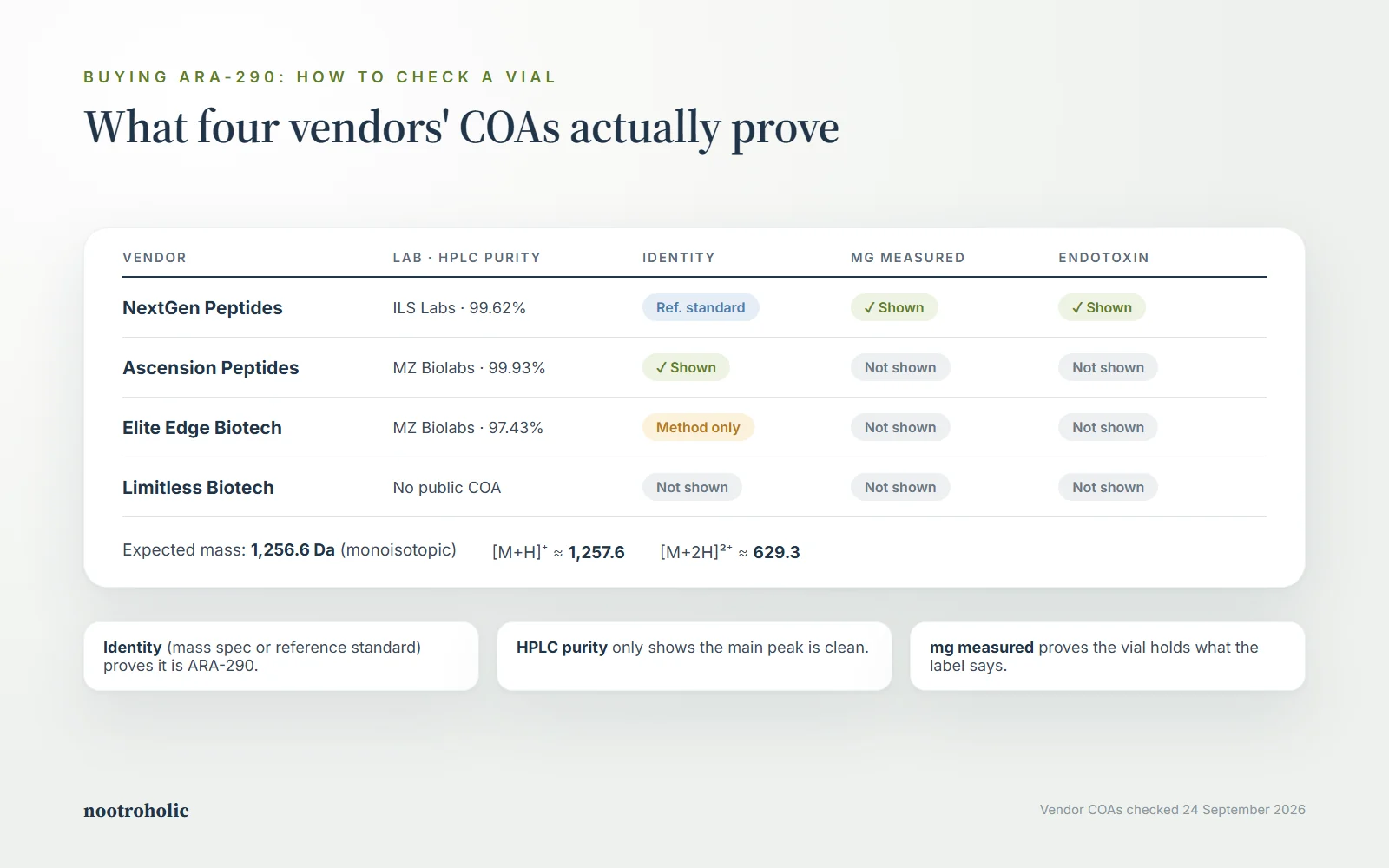
An 11-amino-acid peptide is cheap to make and easy to fake. An HPLC test shows that the powder is mostly one clean substance, but not which substance. Proving identity takes either mass spectrometry, which weighs the molecule, or a retention-time match against a reference standard. Look for four things:
We checked four US vendors’ public certificates on 24 September 2026:
| Vendor | Vial | Price | $/mg | COA lab and lot | Purity | Identity test |
|---|---|---|---|---|---|---|
| NextGen Peptides | 16 mg | $60 | $3.75 | ILS Laboratories, lot ARA16-01 (Aug 2026) | 99.62% | Reference-standard match, not mass spec. Also 16.59 mg measured; sterility, endotoxin and heavy metals passed. |
| Ascension Peptides | 10 mg | $70 (list $79.99) | $7.00 | MZ Biolabs, lot 53-12250129 (Mar 2026) | 99.93% | Mass spec. 1,256.66 Da measured vs 1,256.60 expected. |
| Elite Edge Biotech | 5 mg | $49.90 (list $99.99) | $9.98 | MZ Biolabs, lot 2026-07-22 (Aug 2026) | 97.43% | Partly. Mass spec named as the method, but no spectrum shown. |
| Limitless Biotech | 8 or 16 mg | Login required | – | No COA on the public product page | – | None shown. “Identity verification” claimed. |
No certificate covers everything. NextGen’s is the most complete: it measures content, sterility, endotoxin (0.124 EU/mL) and heavy metals, and it’s the cheapest per mg. It confirms identity by reference standard rather than mass spec, though. Its product page also lists the wrong sequence and molecular weight (both belong to BPC-157), a copy-paste slip that the COA contradicts. Ascension’s is the only certificate that proves identity by mass. Elite Edge’s lot tested at 97.43%, with a 2.1% impurity peak, below the 98% we look for. Our guide on how to read a peptide COA explains each line.
- ILS Labs: 99.62% HPLC
- 16.59 mg measured in a 16 mg vial
- Sterility, endotoxin and heavy metals passed
- MZ Biolabs: 99.93% HPLC
- 1,256.66 Da measured (expected 1,256.60)
- No content or endotoxin data
- MZ Biolabs: 97.43% HPLC
- Mass spec named, spectrum not shown
- Highest price per mg
Lots change, so check the COA for yours. Our best peptide vendors list and our guide to peptide scams to avoid explain how we vet sellers. Comparing repair peptides? See BPC-157 for nerve and tendon repair, the KLOW peptide blend, or our hub on peptides for healing.
Sources
- Brines M, et al. Erythropoietin mediates tissue protection through an erythropoietin and common β-subunit heteroreceptor. PNAS. 2004. doi:10.1073/pnas.0406491101 Animal/Lab
- Brines M, et al. Nonerythropoietic, tissue-protective peptides derived from the tertiary structure of erythropoietin. PNAS. 2008. doi:10.1073/pnas.0805594105 Animal/Lab
- Collino M, Thiemermann C, Cerami A, Brines M. Flipping the molecular switch for innate protection and repair of tissues. Pharmacol Ther. 2015. doi:10.1016/j.pharmthera.2015.02.005 Review
- Heij L, et al. Safety and efficacy of ARA 290 in sarcoidosis patients with symptoms of small fiber neuropathy: a randomized, double-blind pilot study. Mol Med. 2012. doi:10.2119/molmed.2012.00332 Human
- Dahan A, et al. ARA 290 improves symptoms in patients with sarcoidosis-associated small nerve fiber loss and increases corneal nerve fiber density. Mol Med. 2013. doi:10.2119/molmed.2013.00122 Human
- Brines M, et al. ARA 290, a nonerythropoietic peptide engineered from erythropoietin, improves metabolic control and neuropathic symptoms in patients with type 2 diabetes. Mol Med. 2015. doi:10.2119/molmed.2014.00215 Human
- Culver DA, et al. Cibinetide improves corneal nerve fiber abundance in patients with sarcoidosis-associated small nerve fiber loss and neuropathic pain. Invest Ophthalmol Vis Sci. 2017. doi:10.1167/iovs.16-21291 Human
- ClinicalTrials.gov. NCT02039687: Phase 2 dose-ranging study of ARA 290 in sarcoidosis (sponsor: Araim Pharmaceuticals). Accessed 24 September 2026. clinicaltrials.gov/study/NCT02039687 Human
- Lois N, et al. A Phase 2 clinical trial on the use of cibinetide for the treatment of diabetic macular edema. J Clin Med. 2020. doi:10.3390/jcm9072225 Human
- Cerit H, et al. Testing the antidepressant properties of the peptide ARA290 in a human neuropsychological model of drug action. Eur Neuropsychopharmacol. 2015. doi:10.1016/j.euroneuro.2015.09.005 Human
- Swartjes M, et al. ARA290 produces long-term relief of neuropathic pain: an experimental study in rats and β-common receptor knockout mice. Anesthesiology. 2011. doi:10.1097/ALN.0b013e31822fcefd Animal
- Swartjes M, et al. ARA 290 produces long-term relief of neuropathic pain coupled with suppression of the spinal microglia response. Mol Pain. 2014. doi:10.1186/1744-8069-10-13 Animal
- Pulman KG, et al. The erythropoietin-derived peptide ARA290 reverses mechanical allodynia in the neuritis model. Neuroscience. 2013. doi:10.1016/j.neuroscience.2012.12.022 Animal
- Liu G, et al. ARA290 inhibits activation of NLRP3 inflammasome in Schwann cells after sciatic nerve injury. Eur J Pharmacol. 2025. doi:10.1016/j.ejphar.2025.177610 Animal
- Bitto A, et al. Activation of the EPOR-β common receptor complex by cibinetide ameliorates impaired wound healing in mice with genetic diabetes. Biochim Biophys Acta Mol Basis Dis. 2018. doi:10.1016/j.bbadis.2017.12.006 Animal
- van Rijt WG, et al. Renoprotective capacities of non-erythropoietic EPO derivative, ARA290, following renal ischemia/reperfusion injury. J Transl Med. 2013. doi:10.1186/1479-5876-11-286 Animal
- Winicki NM, et al. A small erythropoietin derived non-hematopoietic peptide reduces cardiac inflammation, attenuates age associated declines in heart function and prolongs healthspan. Front Cardiovasc Med. 2022. doi:10.3389/fcvm.2022.1096887 Animal
- McVicar CM, et al. Intervention with an erythropoietin-derived peptide protects against neuroglial and vascular degeneration during diabetic retinopathy. Diabetes. 2011. doi:10.2337/db11-0026 Animal
- Muller C, et al. ARA290 improves insulin release and glucose tolerance in type 2 diabetic Goto-Kakizaki rats. Mol Med. 2016. doi:10.2119/molmed.2015.00267 Animal
- Chen H, et al. Therapeutic effects of nonerythropoietic erythropoietin analog ARA290 in experimental autoimmune encephalomyelitis rat. J Neuroimmunol. 2014. doi:10.1016/j.jneuroim.2014.01.006 Animal
- Grayston R, et al. A systematic review and meta-analysis of the prevalence of small fiber pathology in fibromyalgia. Semin Arthritis Rheum. 2019. doi:10.1016/j.semarthrit.2018.08.003 Human (not ARA-290)
- Bohlius J, et al. Recombinant human erythropoiesis-stimulating agents and mortality in patients with cancer: a meta-analysis of randomised trials. Lancet. 2009. doi:10.1016/S0140-6736(09)60502-X Human (EPO)
- Araim Pharmaceuticals. Cibinetide (ARA 290) regenerates small nerve fibers and improves neuropathic clinical symptoms in the orphan disease of sarcoidosis. Press release, PR Newswire, 8 May 2017. prnewswire.com
- Retracted papers: Mol Med 2012, “Delayed administration of pHBSP attenuates acute kidney injury” (PMID 22415011), and Br J Pharmacol 2014, “A non-erythropoietic peptide derivative of erythropoietin decreases susceptibility to diet-induced insulin resistance in mice” (PMID 25164531). Both are flagged as retracted in PubMed.
- DrugBank. Cibinetide (DB13006), clinical trials listing. Accessed 24 September 2026. go.drugbank.com/drugs/DB13006
- Vendor certificates reviewed 24 September 2026: NextGen Peptides (ILS Laboratories COA-2026-SGKPSI, lot ARA16-01, 24 August 2026); Ascension Peptides (MZ Biolabs lot 53-12250129, signed 5 March 2026); Elite Edge Biotech (MZ Biolabs lot 2026-07-22, signed 12 August 2026).